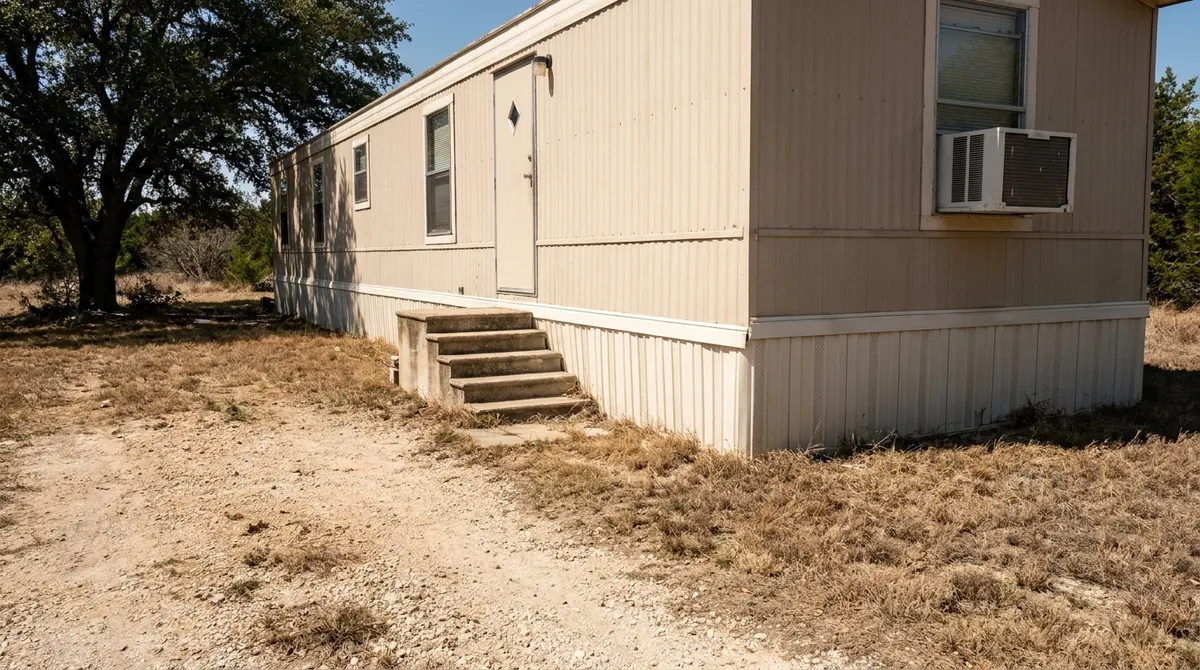
Owners across Central Texas tell us the same story. They called three or four real estate agents about their manufactured home, and either nobody called back or everybody politely declined.
The usual explanation offered is that the commission is too small to bother with. That is sometimes true. But there is a more specific reason underneath it, and it is written into Texas law. Knowing it tells you immediately whether listing is even an option for your home, which is the first question in this comparison and the one almost nobody answers.
For a side-by-side of net proceeds and closing costs, our listing versus cash offer guide does that arithmetic. This article is about which path is actually available to you, and when you should push for the listing.
The licensing rule that decides it
Manufactured housing in Texas is regulated under Occupations Code Chapter 1201, administered by TDHCA, and real estate brokerage is regulated separately under Chapter 1101. They are different licenses.
Section 1201.007 is the bridge between them, and it is narrow. Chapter 1201 does not apply to a person licensed as a real estate broker or salesperson under Chapter 1101 who, as agent of a buyer or seller, negotiates the sale or lease of a manufactured home and the real property to which the home is attached, if the same person is the record owner of both the manufactured home and the real property, and the sale or lease occurs in a single real estate transaction.
Both conditions. Not either.
So in practical terms:
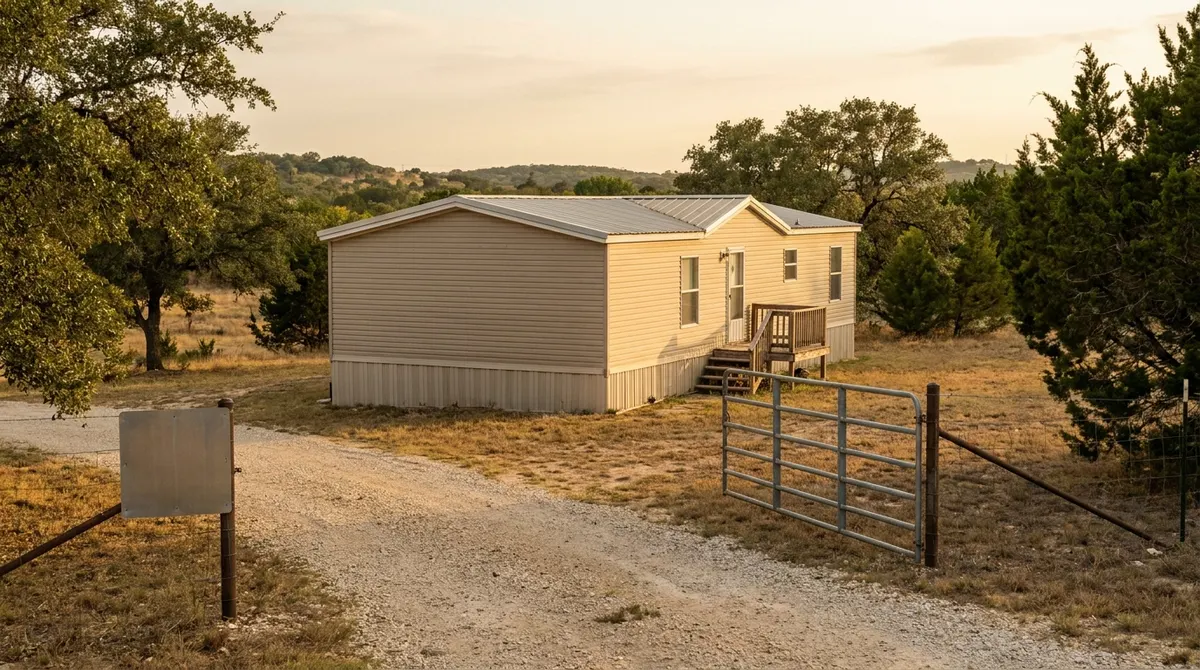
If you own the home and the land, and they sell together in one transaction, a conventional real estate agent can handle it. Listing is fully available to you, and in many cases it is the better path.
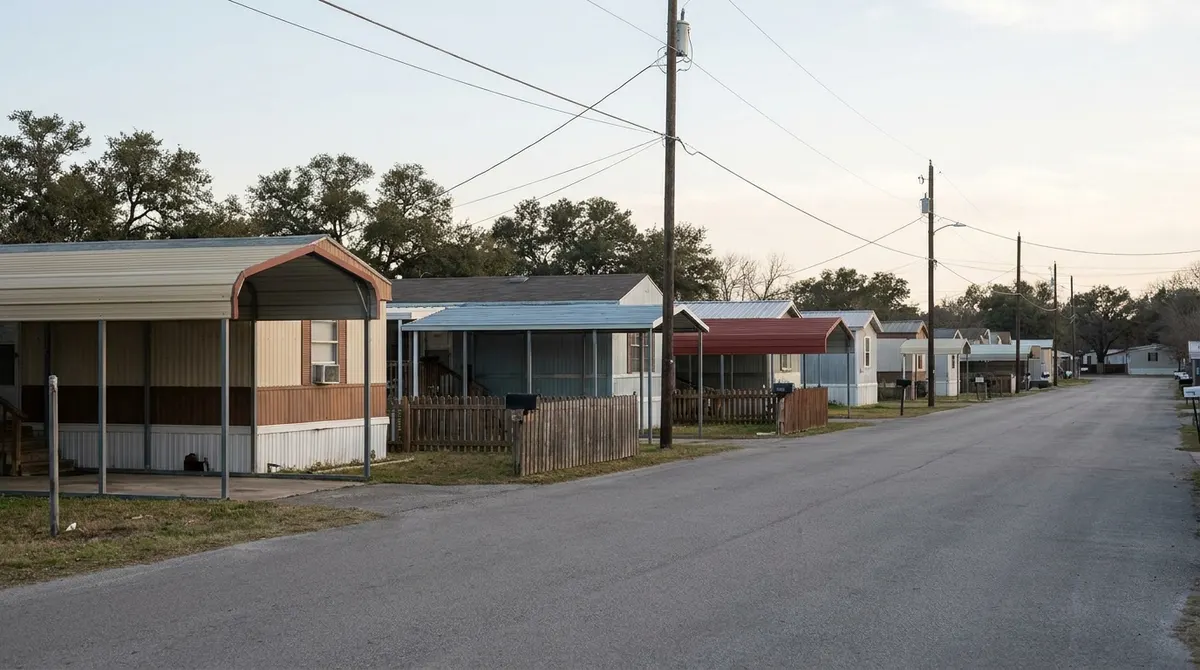
If your home sits on a leased lot in a community, there is no real property attached that you own, so the exception does not reach. Negotiating that sale for you falls under Chapter 1201 licensing.
If the home sits on family land titled to somebody else, same answer, and this comes up constantly on rural acreage in Bastrop, Caldwell and Burnet counties where a home was set on a parent’s property years ago. Our post on homes on family land covers that specific tangle.
That is why the answer changes depending on which home you are asking about. It is not preference. It is which license the transaction requires.
What listing actually looks like here when it is available
Assume you are in the good case: home and land, one owner, one transaction. What are you signing up for?
A longer timeline. You are marketing to end buyers, many of whom need financing, and manufactured home lending is slower and narrower than conventional mortgage lending. Our retail listing timeline walks through it week by week.
Commission and closing costs. Real numbers that come off the top, and they are the price of reaching the whole market.
Repairs and inspection. A financed buyer brings an inspector and often an appraiser, and both will find things. Structural floor issues in particular can end a financed deal outright.
Showings. Which matter more than people think in rural Central Texas. A home outside Burnet or in Caldwell County gets fewer casual visits than one in Pflugerville, simply because of the drive.
A higher gross price, usually. This is the point. Competition among end buyers generally produces a stronger number than a single investor’s offer, and on a good home with clean paperwork that gap can be substantial.
What a cash sale actually buys you
Not a better price. Something else.
Certainty. No financing contingency, which is where most manufactured home deals die. If your home cannot be financed, this is not a preference, it is the only market.
Speed, controlled by fewer parties. As we cover in our piece on the four clocks in a Central Texas sale, a cash sale switches off the buyer-financing clock entirely, which is usually the longest one.
No repairs and no showings. You sell the home in the state it is in.
One party handling the paperwork. The Statement of Ownership transfer, the lien payoff, the community approval. In a community sale this matters more than anywhere else, because Section 94.252 requires the community to approve your buyer in writing before a sale can happen, and a buyer who has been through that process before is worth something.
You pay for all of that in gross dollars. Our post on how a cash offer is calculated shows exactly where.
When you should list, plainly
We will say this to your face, and we say it regularly.
List when your home is in good condition, sits on land you own, and has a clean Statement of Ownership in your own name. You are the seller a retail market is built for. Paying a cash buyer for certainty you do not need is a bad trade.
List when the land is doing the work. If the real asset is acreage in eastern Travis County along the SH 130 corridor, or in Comal County near the Guadalupe, or anywhere the land has outrun the home, you want the widest possible pool of buyers looking at that land. That is a listing.
List when you have time and no carrying pressure. No lot rent, no arrears, no estate clock, no relocation date. Time is what converts into price.
List when the home has been made part of the real property. If the election under Section 1201.2055 was properly perfected, your buyer can pursue real estate financing, which widens the pool considerably. That is worth a listing timeline.
List when you would enjoy it. Some people do. That is a legitimate reason.
Not Sure Which Path Is Yours?
We are licensed for both. Tell us about the home and we will tell you honestly which one fits, including when it is not us.
Get My Cash Offer →When cash is the more honest answer
When the home cannot be financed. Pre-1976 construction, structural floor damage, active mold. These remove financed buyers regardless of price, so the retail market is thinner than it appears.
When the home is on a leased lot. Not always, but often. The buyer pool is smaller, the community holds a veto, and the carrying cost runs monthly whatever happens.
When something is accruing. Lot rent, arrears, an estate’s expenses, a loan you cannot carry. Our posts on lot rent arrears and what waiting costs an estate both come down to the same arithmetic: a higher gross price that arrives four months later is not automatically more money.
When you are out of state or otherwise cannot manage it. Repairs, contractors and showings all assume somebody local with time.
When the paperwork is broken. A Statement of Ownership in a deceased relative’s name is not a listing problem, it is a title problem, and it has to be solved before a retail buyer can close.
The middle option people forget
These are not the only two doors. A licensed manufactured housing brokerage can list a home rather than buy it, which means the same operation that would make you a cash offer can also market the home to end buyers.
Ask any buyer you talk to whether they are licensed and whether they will present you both options with real numbers. A buyer who will only quote you their own offer is not giving you a comparison, they are giving you a price.
How to decide in one afternoon
Find out four things. Whether you own the land. Whether the Statement of Ownership is clean and in your name. What the home would need to pass a lender’s inspection. And what it costs you per month to keep waiting.
Those four answers decide this, not a general preference for one path over the other.
We work across Central Texas, including Austin, San Marcos, Lockhart and Waco, and we are a TDHCA-licensed brokerage, so we can do either one. Send us the details and we will give you both numbers, the cash offer and what we would expect a listing to do, along with an honest view of which one fits your situation. Sometimes that answer is that you do not need us.
Cash Offer or Listing, Both Are Open Here
Mobile Bye Bye holds a TDHCA manufactured housing license, so we can buy the home or list it for you.
Get My Cash Offer →This article is general information about Texas manufactured housing and real estate licensing and about typical transaction economics. It is not legal or financial advice, and it is not a prediction of what any particular home will sell for. Consult a Texas attorney or a licensed professional about your specific situation.
Sources: Texas Occupations Code Chapter 1201, Manufactured Housing; Texas Occupations Code Chapter 1101, Real Estate Brokers and Sales Agents; Texas Property Code Chapter 94, Manufactured Home Tenancies; TDHCA Manufactured Housing Division