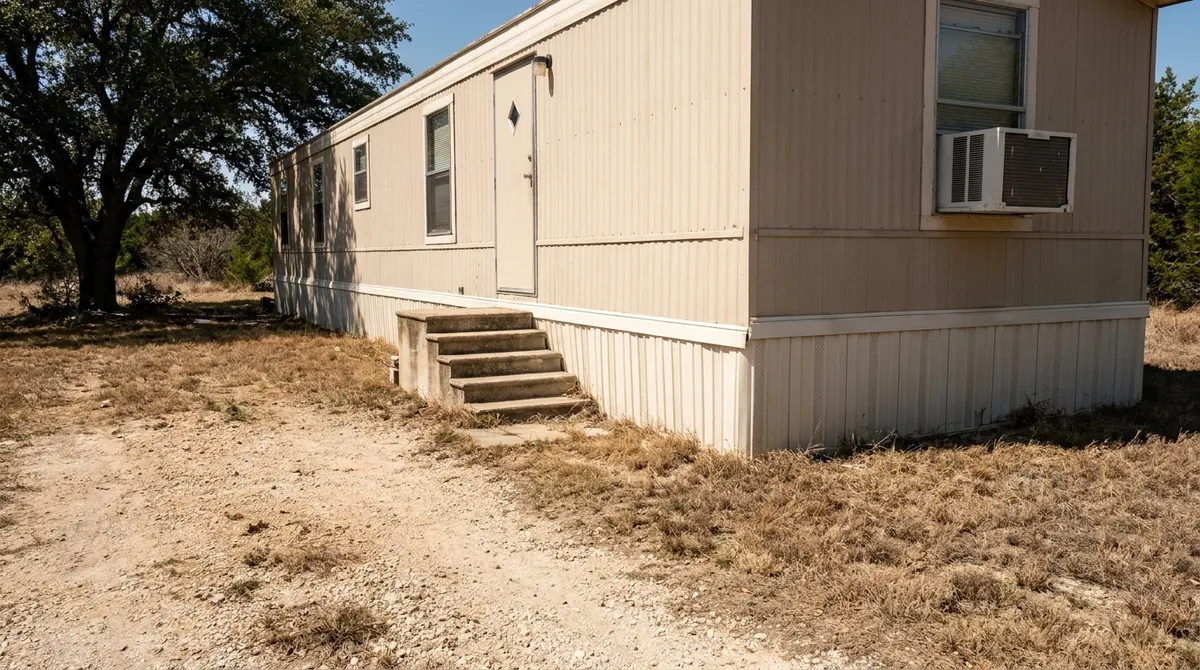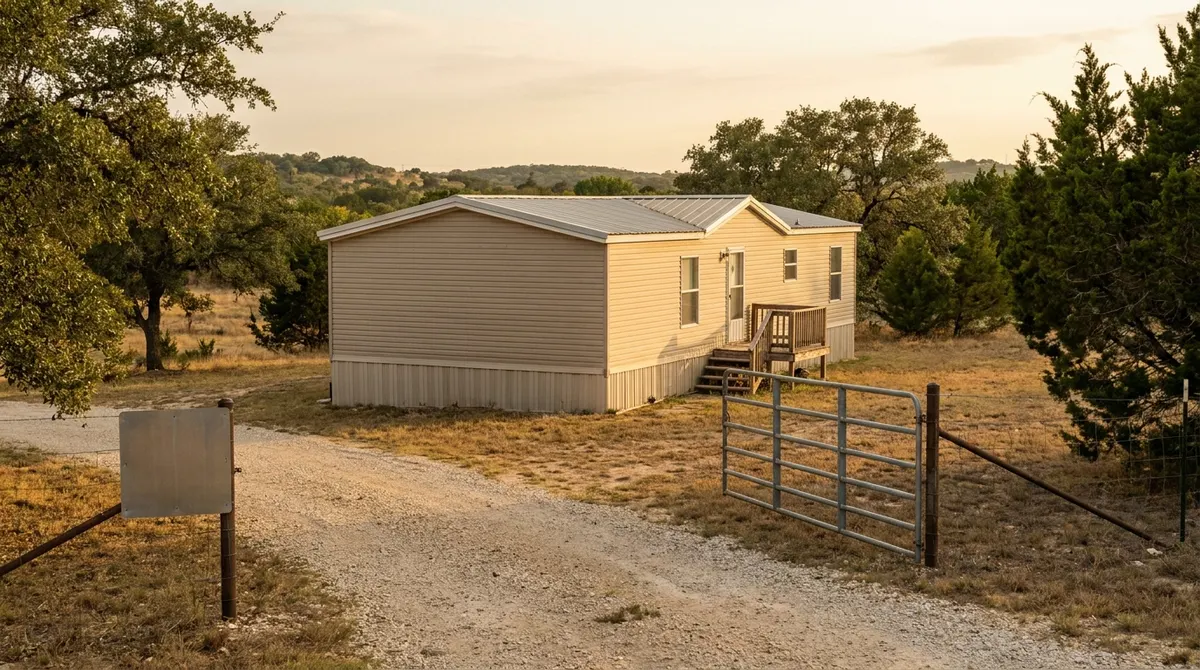
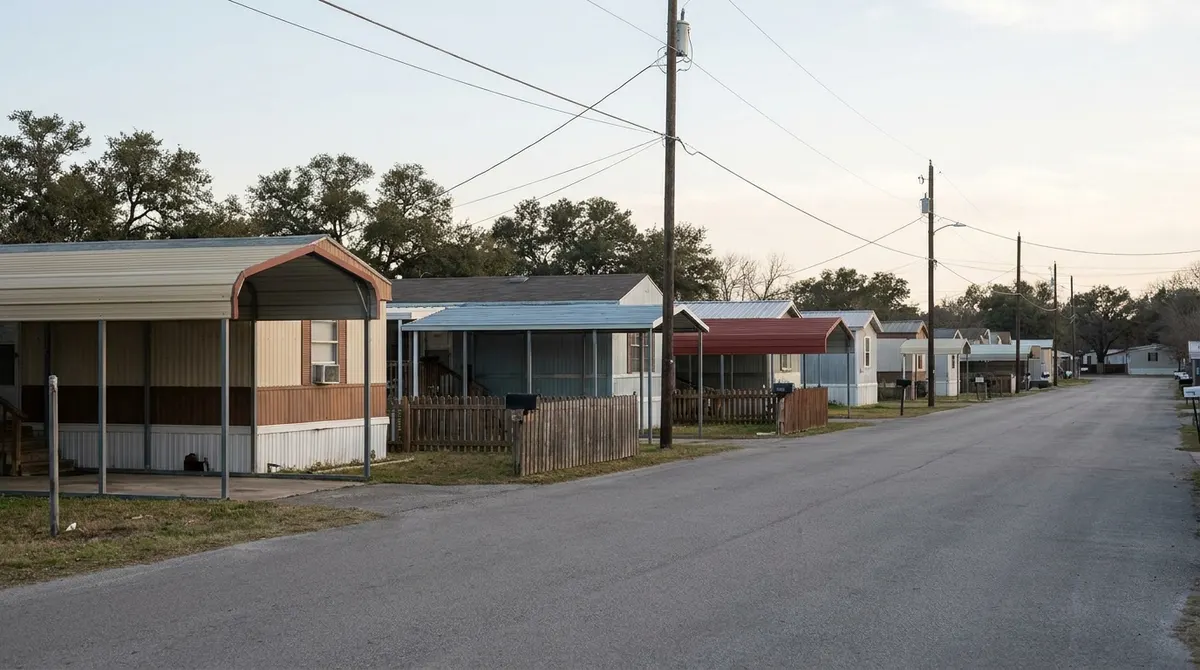
Two identical 2004 double-wides. Same condition, same floor plan, same county. One sits on three acres outside Lockhart. The other sits on a leased lot in a community off the I-35 corridor in San Marcos.
They will not sell for the same number and they will not sell the same way. The difference is not about the homes. It is about how many people have to say yes.
The community sale needs two yeses
On land you own, a sale needs one agreement: yours and the buyer’s.
In a community, it needs two, and the second one is not yours to give. Texas Property Code Section 94.252 is explicit about it. The owner of a manufactured home may sell a home located on the leased premises if the purchaser is approved in writing by the landlord, and a lease agreement is signed by the purchaser.
Read that carefully, because it contains the whole problem and part of the solution.
Written approval of the purchaser. Not of the sale. Of the person. Your buyer has to pass whatever screening the community applies: credit, income, background, sometimes pets, sometimes the number of occupants. A buyer with cash in hand and bad credit can be declined, and there is nothing in your contract that overrides that.
A signed lease. The buyer becomes the community’s tenant on the community’s terms, which may not be your terms. If your lot rent is below what the community currently charges, your buyer is almost certainly not inheriting your rate. That difference is priced into what they will pay you for the home, whether or not anyone says so out loud.
What the community may not do
The same statute puts a real limit on the community, and most sellers have never heard of it.
Unless the home owner has agreed in writing, the landlord may not require the owner to contract with the landlord to act as an agent or broker in selling the home, and may not require the owner to pay a commission or fee from the sale of the home.
That matters because some communities present in-house sales assistance as a condition of selling. Under Chapter 94 it is not one, absent your written agreement. You are entitled to sell your own home to your own buyer, subject to the community’s approval of that buyer as a tenant.
Section 94.008 also treats adopted community rules as part of the lease when they are not arbitrary or capricious, which cuts both ways. Legitimate condition and appearance standards are enforceable. A rule invented for your transaction is a different conversation, and one for a lawyer.
The practical sequence in a community sale
Order matters here more than in a land sale.
- Read your lease before you do anything. Find the transfer provisions, the notice requirements, and any condition standards a home must meet to stay on the lot.
- Talk to management early, in writing. Ask what their approval process is, what it requires from a buyer, and how long it typically takes. A community that takes six weeks to screen is a material fact about your sale.
- Get current or know the number. Arrears almost always have to be cleared at or before transfer, and they come off your proceeds. If you are behind, read our lot rent timeline guide first.
- Get the estoppel. A written statement from the community confirming rent status, lot number and that they will process the buyer.
- Then close. The Statement of Ownership transfer with TDHCA runs in parallel, and the buyer signs a new lease.
Skipping step two is the single most common way a community sale dies. The buyer is approved last, discovers the new rent, and walks.
Why a home on your own land reaches more people
Take the community out and several constraints leave with it.
Nobody screens your buyer. The pool is everyone who wants the home, not everyone who wants the home and passes a landlord’s application.
Financing opens up, sometimes. If the home has been made part of the real property, a buyer can pursue the kinds of financing that attach to real estate. Texas Occupations Code Section 1201.2055 sets out the election to treat a manufactured home as real property where it is attached to land the owner owns or holds under a long-term lease, which requires filing in the county real property records and notifying both the department and the chief appraiser. A home that has done this is a different asset from one that has not.
There is no lot rent clock. A buyer carrying a home on land pays taxes and insurance. A buyer carrying a home on a lot pays rent every month regardless. That carrying cost comes directly out of the offer.
The land may be doing the heavy lifting. In Bastrop County along the Lost Pines and SH 71, in eastern Travis County along the SH 130 corridor, and in Caldwell County as Austin pushes east, the acreage under an older manufactured home has frequently appreciated faster than the home has depreciated. We have made offers where the home was close to a rounding error.
Not Sure Which Transaction You Are In?
Send us the address and the lot number. We will tell you whether you are in a community sale or a land sale, and what that means for your number.
Get My Cash Offer →The complication on the land side
Land sales are simpler in one way and messier in another.
You may be selling two assets at once. If the home was never made part of the real property, the land transfers by deed and the home transfers by Statement of Ownership, and both have to work. A buyer’s title company handles the land. Somebody has to handle the home, and in Texas that somebody generally needs a manufactured housing license.
This is where a detail from Texas Occupations Code Section 1201.007 becomes practical rather than academic. A real estate broker or salesperson licensed under Chapter 1101 is outside Chapter 1201 when negotiating the sale of a manufactured home and the real property it is attached to, but only if the same person is the record owner of both the home and the land, and the sale happens in a single real estate transaction.
Which means: if you own the home and the land and they sell together, a conventional real estate agent can handle it. If the home sits on a leased lot, or on family land owned by somebody else, or on land titled to a different entity, that exception does not apply. That is a large part of why so many Central Texas owners are told by agents that they do not handle mobile homes. It is often not reluctance. It is licensing.
We cover that trade-off in more depth in our comparison of a cash buyer against listing with a Realtor.
Which situation actually sells for more
All else equal, the home on owned land. More buyers, more financing routes, no landlord veto, no rent clock.
But all else is rarely equal, and community homes have two real advantages. They tend to be cheaper entry points, so the buyer pool at the bottom of the market is deep. And a well-run community with stable rent and a fast approval process can move a home quickly precisely because the community itself wants the lot filled with a paying tenant.
The worst position is a community home in a park under pressure: ownership recently changed, rent is climbing, approvals are slow, and there is talk about the land. That describes several places in southeast Austin near the Del Valle and SH 130 development corridor, and owners there tend to have less time than they think. Our post on what happens when a park is sold or closing covers that specific situation.
Where to start
If you are in a community, get your lease and call management this week. If you are on your own land, pull your Statement of Ownership and your deed and find out whether the home was ever elected into the real property.
Either way, the document you need is the one you do not have yet. We buy homes in both situations across the Austin and San Antonio metros, from New Braunfels to Burnet, and we handle the community approval and the TDHCA transfer as part of the deal. Send us the address and the lot number and we will tell you which of these two transactions you are actually in.
We Buy in Communities and on Land
From New Braunfels to Burnet, we handle the community approval and the TDHCA transfer as part of the deal.
Get My Cash Offer →This article is general information about Texas manufactured home tenancies and titling. It is not legal advice. Lease terms, community rules and title histories vary. Consult a Texas attorney about your specific lease or property.
Sources: Texas Property Code Chapter 94, Manufactured Home Tenancies; Texas Occupations Code Chapter 1201, Manufactured Housing; TDHCA, Applying for a Statement of Ownership; TexasLawHelp, Manufactured Home Communities and Eviction