
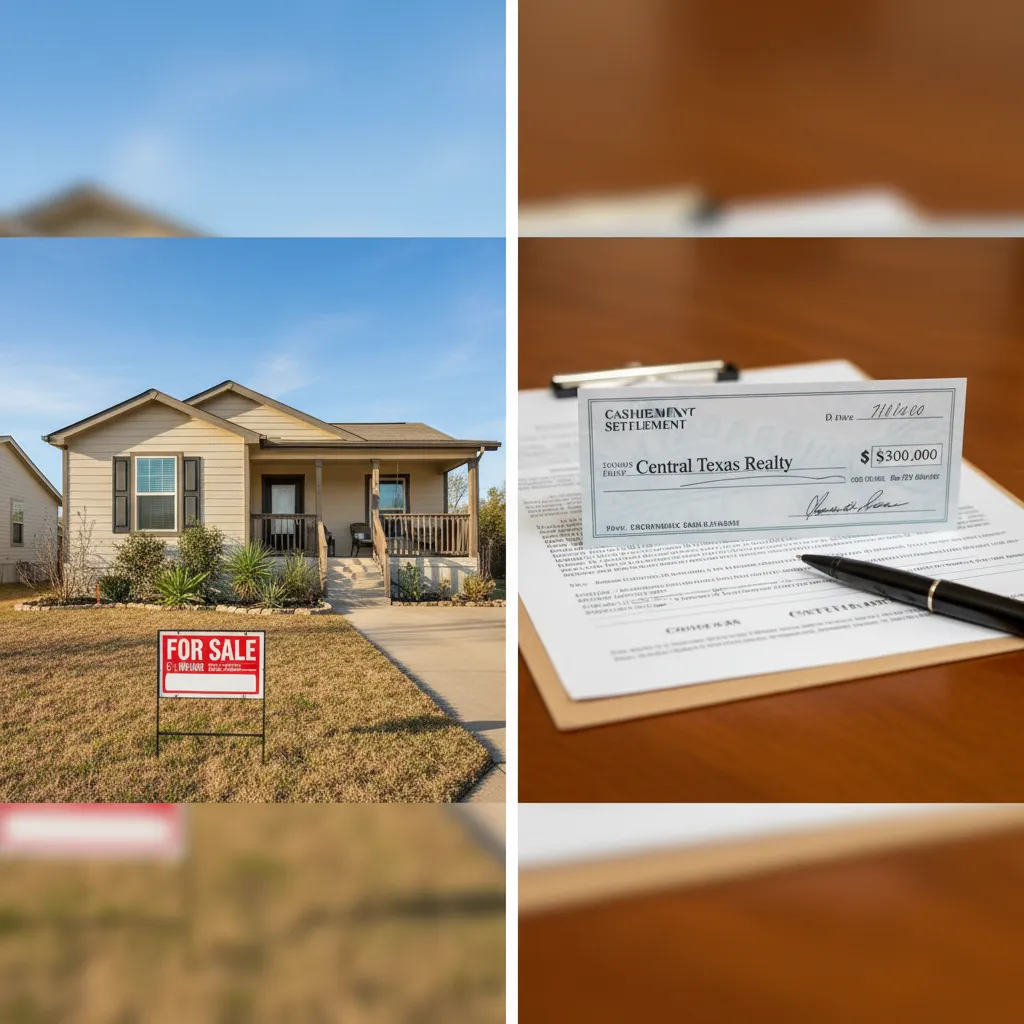
There are two honest ways to sell a mobile home in Texas: list it on the open retail market with a TDHCA-licensed broker, or accept a direct cash offer and close in days instead of months. Both are legitimate paths. Both have real tradeoffs. The right answer depends on your home’s condition, your timeline, and how much of the gross sale price actually lands in your pocket after all the costs of selling are paid. This guide lays out both sides fairly so you can decide which path fits your situation.
The Honest Tradeoff: Gross Price vs. Net Proceeds
The single most important idea in this decision is the difference between the gross sale price (the headline number on the contract) and the net proceeds (the dollars that actually reach your bank account after every cost of selling is paid).
A retail listing usually produces a higher gross price than a cash offer. That is not in dispute. A well-prepared home marketed to end-user buyers can command fair market retail value. The catch is that retail selling comes with real expenses: broker commission, make-ready repairs, professional photography, showings, buyer financing contingencies, and the holding costs that accumulate every week the home sits on the market.
A cash offer, by contrast, is typically 15 to 30 percent below theoretical retail. That sounds like a big discount until you subtract the costs a listing carries. When you run the numbers, the net difference is often much smaller than the gross difference suggests — and in some situations the cash offer actually nets more.
Neither path is objectively better. They serve different situations. Our job in this article is to help you figure out which one serves yours.
Side-by-Side: Timeline and Cost Comparison
Here is what each path actually looks like in the real world for a Texas mobile home.
Traditional Listing Timeline (45–120 days)
- Week 1–2: Listing consultation, pricing analysis, listing agreement signed, photos scheduled.
- Week 2–4: Make-ready repairs, professional photography, staging or declutter, listing goes live.
- Week 4–12: Active marketing, showings, open houses, offers negotiated.
- Week 8–16: Accepted offer, buyer financing (chattel loan or FHA Title I), inspection, appraisal, contingency period.
- Week 10–18: Closing — title transfer through TDHCA, funds disbursed.
For a well-priced home in good condition in a desirable park, closer to 45 days is realistic. For a home that needs work, sits in a smaller market, or runs into buyer financing problems, 90 to 120 days is more typical.
Direct Cash Close Timeline (7–14 days)
- Day 1: You submit home details. Cash offer delivered within 24 hours.
- Day 2–3: Offer accepted, purchase agreement signed, title work begins.
- Day 3–10: Title verified through TDHCA, liens cleared if any, park approval if applicable.
- Day 7–14: Closing. Funds wired or cashier’s check delivered.
No showings. No buyer financing to fall through. No inspection contingencies for the seller to repair to. No commissions.
What Listing Actually Costs (Be Honest With Yourself)
Most sellers underestimate the true cost of a retail listing because the line items are spread across months and paid in different ways. Here is what to budget.
Broker Commission
A TDHCA-licensed broker representing a personal property manufactured home typically charges 6 to 10 percent of the sale price. That is higher than the 5 to 6 percent you often see on site-built real estate and there is a reason: the sale prices are lower (so a percentage has to cover more work per dollar), the buyer pool is smaller, and TDHCA paperwork is its own specialty. On a $45,000 sale, expect $2,700 to $4,500 in commission.
Be very careful with any traditional real estate agent who agrees to list a personal property manufactured home. In Texas, personal property mobile home sales require a TDHCA license, not a TREC real estate license. For more on that distinction, see our guide on whether to use a realtor to sell your mobile home.
Make-Ready Repairs
Retail buyers expect a move-in-ready home. Common pre-listing expenses include:
- Deep clean and declutter: $200–$800
- Paint (interior touch-up or full): $500–$3,500
- Flooring repair or replacement: $1,000–$6,000
- HVAC service or replacement: $200–$5,000
- Plumbing repairs: $300–$2,500
- Roof repair or recoat: $800–$4,500
- Skirting and exterior cleanup: $300–$1,500
A home in solid shape may only need $1,500 to $3,000 of prep. A home with deferred maintenance can easily run $8,000 to $15,000 before it is ready to photograph.
Photography, Marketing, and Staging
Professional photography runs $150 to $400. Light staging (rugs, a few pieces of furniture, lamps) can add another $200 to $600. Most brokers include marketing in their commission, but ask.
Showings and Holding Costs
Every week on the market costs you money even if nothing else is happening:
- Lot rent (if in a park): $400–$900 per month
- Utilities (to keep the home showable): $100–$300 per month
- Insurance: $30–$80 per month
- Property taxes: accrue monthly
A 90-day listing on a parked home can easily burn $2,000 to $3,500 in holding costs alone.
Buyer Financing Contingencies
Most retail buyers of manufactured homes use chattel financing or FHA Title I loans. Approval is slower and failure rates are higher than conventional mortgages. It is not unusual for a retail deal to fall through at week 10 because the buyer’s financing collapsed, sending you back to the start. You also may be asked to contribute toward closing costs or make repairs that come up on the buyer’s inspection report.
What a Cash Offer Actually Costs
Cash buyers are not charities. Their offers are below theoretical retail because they take on the risk, repair cost, carrying cost, and resale time that a seller would otherwise absorb. That said, the cost structure is dramatically simpler:
- No broker commission. Zero percent. The buyer pays their own closing costs.
- No repairs. The home is purchased as-is, even with significant damage.
- No staging, photography, or marketing. None of it matters to a cash buyer.
- No holding costs. You close in 7 to 14 days, so lot rent, utilities, insurance, and taxes stop immediately.
- No financing contingencies. Funds are verified up front.
- No showings or open houses. One inspection, maybe two, and you are done.
The tradeoff is the gross price. A fair cash offer from a reputable buyer typically lands 15 to 30 percent below retail value. If you want to understand why cash offers are structured that way and what is fair, our article on the top 25 reasons to sell for cash breaks down the math and the situations where it makes sense.
Who Should List: Signs Retail Is the Right Path
Listing is usually the right choice when most of the following are true.
- The home is retail-ready or close to it. No major deferred maintenance, functioning systems, clean interior, curb appeal in place.
- You have 90+ days of runway. No foreclosure deadline, no out-of-state move on a tight date, no estate that needs to close quickly.
- You want maximum gross price and can stomach the variability. You are willing to accept that the final net may end up similar to a cash offer in exchange for the chance that it lands higher.
- The home is in a desirable park with lot rent that retail buyers will accept. Parks with reasonable rents, good reputations, and lenient approval criteria are much easier to sell into.
- Title is clean and in your name already. Or will be before the listing goes live.
- You can cover holding costs during the listing period. Lot rent and utilities while the home is on the market are on you, not the broker.
If five or six of those apply, a listing is probably your best path to maximum net proceeds.
Who Should Take Cash: Situations Where Cash Nets More
Cash is usually the right choice when any of the following apply.
- The home has significant damage or deferred maintenance. Foundation issues, water damage, roof leaks, soft subfloor, outdated HVAC — any of these push retail buyers away and push repair budgets into five figures.
- You are in a distress situation. Divorce, death, job relocation, medical event, foreclosure timeline — anything with a hard deadline.
- The park has problems that retail buyers see as red flags. Rent increases, pending closure, poor management, bad online reviews, or restrictive tenant rules.
- Title is complicated. Missing Statement of Ownership, unresolved liens, inherited home with unclear heirship — cash buyers deal with these every week. Retail buyers’ financing will not.
- You have a tight timeline. 30 days or less.
- You live out of state and cannot manage showings or repairs. The logistical drag alone often eats any retail premium.
- You simply want certainty and a clean exit. No open houses, no negotiating, no calls about the home at odd hours.
If any one of those applies strongly, cash is usually the better math once you factor in the real costs and risks of listing.
Not Sure Which Path Fits You?
We will send you both numbers side by side — the estimated retail listing range (with costs subtracted) and our no-obligation cash offer. No pressure, no hard sell. You decide.
Get Both Numbers →The Net-Proceeds Worksheet
Before you commit to either path, work through this quick worksheet. Fill in your own numbers honestly.
Listing Path — Net Proceeds Calculation
- Estimated gross retail sale price: $__________
- Minus broker commission (typically 6–10%): − $__________
- Minus make-ready repairs (quote honestly): − $__________
- Minus photography and staging: − $__________
- Minus estimated holding costs (lot rent + utilities + insurance × expected months on market): − $__________
- Minus estimated buyer concessions (closing cost help, inspection repairs): − $__________
- Minus TDHCA title transfer fees and closing costs: − $__________
- Estimated net proceeds from listing: $__________
Cash Path — Net Proceeds Calculation
- Cash offer amount: $__________
- Minus broker commission: − $0
- Minus make-ready repairs: − $0
- Minus photography and staging: − $0
- Minus holding costs (typically 0–14 days): − $__________ (usually under $300)
- Minus buyer concessions: − $0
- Minus closing costs (usually buyer-paid): − $0
- Estimated net proceeds from cash offer: $__________
Compare the two bottom-line numbers. Then weight the listing number by the probability of success (retail listings have a meaningful failure rate, especially with chattel financing) and by how much your time and certainty are worth.
When sellers run this honestly, the cash number is competitive with the listing number far more often than they expect — and for homes that need work, cash frequently wins outright.
A cash offer is not the same as a lowball offer. A lowball is a number pulled from thin air to see if you will bite. A cash offer is a structured price that reflects the actual repair, carry, and resale economics of your specific home. Always ask for the reasoning behind any offer before accepting or rejecting it.
The Hybrid Option: Dual-Licensed Broker Who Can Do Both
Here is a path most sellers do not know exists: working with a single company that is both a TDHCA-licensed brokerage and a direct cash buyer. Mobile Bye Bye is structured this way on purpose.
What that means practically for you:
- We can list your home retail if that is the right path, acting as your broker and marketing to end-user buyers.
- We can buy your home directly for cash if that is the right path, closing in 7 to 14 days.
- You can start with a listing and pivot to cash if the market is slow or your timeline changes. No canceling contracts, no finding a new buyer — the paperwork rolls over.
- Every listing client gets a standing cash-offer backup they can trigger at any time during the listing.
- We give you both numbers up front so you can compare apples to apples before committing to either path.
This is genuinely different from how most of the industry operates. Traditional brokers cannot also be cash buyers. Traditional cash buyers cannot legally represent you as a broker on a retail listing. A dual-licensed operator eliminates that either-or choice.
For more on why the licensing matters and how brokerage representation protects Texas sellers, see our press release on real estate agent services for manufactured homes.
Where to Start Each Path
Once you have a sense of which direction fits your situation, here is how to start moving.
Ready to List? Use Our Listing Intake
Ready to list? We’ve set up a simple listing intake at mobilebuybuy.com/list-home.html — fill out the form and we’ll price your home and handle the listing. The form takes about 5 minutes. We will respond within 24 hours with a suggested retail price range, a line-item estimate of net proceeds after commission and costs, and a no-obligation cash offer so you can see both numbers side by side before deciding.
Ready for Cash? Request an Offer
If cash is clearly the right fit for your situation, the fastest path is our cash-offer form on the homepage. Submit your address, answer a few quick questions about the home, and we will deliver a written offer within 24 hours. No walkthrough required for the initial number.
Still Deciding? Get Both Numbers
You do not have to choose in advance. Most of our sellers want to see both numbers before they decide. Either form above will produce both — just tell us in the notes that you want to compare paths. For a broader overview of all the ways you can sell a Texas mobile home, see our complete guide to selling a mobile home in Texas in 2026.
FAQ: Listing vs. Cash Offer for Texas Mobile Homes
Will I net more money listing or taking a cash offer in Texas?
It depends on the home’s condition and your timeline. A retail listing usually produces a higher gross sale price, but by the time you subtract broker commission (typically 6–10% of the sale price for a TDHCA-licensed personal property listing), repair and make-ready costs, photography, holding costs for 45 to 120 days of lot rent and utilities, and buyer financing concessions, the net proceeds often come within a few thousand dollars of a fair cash offer. If the home is retail-ready and the market is strong, listing usually nets more. If the home needs work or you are on a tight timeline, cash often nets more once costs are factored in.
How long does it take to sell a Texas mobile home on the retail market?
A typical retail listing in Texas takes 45 to 120 days from signed listing agreement to closing. That breaks down to roughly 2 to 4 weeks of prep and photography, 30 to 75 days of active marketing and showings, and 14 to 30 days from accepted offer to close while the buyer finalizes chattel or FHA financing. Homes in distressed condition, in smaller markets, or during slow seasons can take longer. A direct cash close in comparison runs 7 to 14 business days once the title is clear.
What commission does a TDHCA-licensed broker charge for a listing?
Commissions for TDHCA-licensed personal property manufactured home listings typically run 6 to 10 percent of the sale price. That is higher than site-built real estate because the sale price is usually lower, the transaction complexity is similar or greater, and the buyer pool is smaller. At Mobile Bye Bye our listing commission is disclosed in writing at the time of the listing agreement and is always negotiated up front. There are no hidden fees.
Can I switch from listing to a cash offer mid-sale?
Yes. If you list with Mobile Bye Bye and the listing is not producing the results you want, or your timeline changes, you can pivot to a direct cash offer at any time. Because we are both a TDHCA-licensed brokerage and a direct cash buyer, the transition is seamless. You do not have to cancel a listing agreement, find a new buyer, or start over. The listing paperwork rolls into a direct purchase agreement.
What condition does my mobile home need to be in to list retail?
Retail buyers expect a move-in-ready home. That means no major deferred maintenance, functioning HVAC and plumbing, clean flooring and paint, no leaks or soft spots in the subfloor, working appliances, and curb appeal. If the home needs more than cosmetic touches, the repair investment to get it retail-ready is often between $3,000 and $15,000 and can take 2 to 6 weeks. Homes that need major repairs are usually better sold as-is to a cash buyer. See our guide on how to sell a mobile home quickly for more on when speed beats price.
Does Mobile Bye Bye list mobile homes on MLS?
Personal property manufactured homes that are not permanently affixed to land owned by the seller generally do not qualify for MLS, because MLS is designed for real property transactions. We market listings through our own retail network, Facebook Marketplace, Zillow (where eligible), MHVillage, park bulletin boards, and direct outreach to qualified buyers in our buyer database. If the home is affixed to land and classified as real property, a real-property listing on MLS may be appropriate and we will advise you accordingly.
If I list, do I still have access to your cash-offer backup?
Yes. Every listing client at Mobile Bye Bye has a standing cash-offer backup at any time during the listing period. If the home is not selling, if a retail buyer’s financing falls through at the last minute, or if life circumstances change, we can close in 7 to 14 days as the direct buyer. You are never stuck waiting on the retail market if your situation shifts.
How do I get started listing my mobile home with you?
We have a simple listing intake form at mobilebuybuy.com/list-home.html. Fill out the form with your home’s address, basic details, and condition notes. We will review it, run comparable sales, and come back within 24 hours with a suggested retail price, an estimate of net proceeds after commission and costs, and a no-obligation cash offer so you can compare both paths side by side.
Mobile Bye Bye is one of the few Texas companies licensed and equipped to serve both sides of this decision. We will give you both numbers, explain the math, and let you choose. Call us at 737-214-0172 to talk it through with a real person.
Disclaimer: This article is for informational purposes only. Mobile Bye Bye is a TDHCA-licensed manufactured home brokerage — we are not attorneys, financial advisors, or tax professionals. Nothing in this article constitutes legal, financial, or tax advice. Commission rates, timelines, and costs cited are industry-typical ranges as of early 2026 and will vary by home, park, and market. Consult a licensed professional for advice specific to your situation.
Two Paths. One Decision. We Can Help With Either.
Whether you want to list your home for maximum gross price or take a fair cash offer and close in two weeks, we handle both — and we will show you both numbers side by side before you decide.
Get My Cash Offer →Or list your home at mobilebuybuy.com/list-home.html