Nobody inherits a manufactured home and immediately does the arithmetic. They deal with the funeral, then the house, then eventually somebody says "what about mom’s mobile home," and by then four months have gone by.
Those four months were not free. That is the point of this article.
The procedural walkthrough of an inherited Texas mobile home, step by step, lives in our inherited home guide, and the executor’s view of a formal probate sale is in our probate guide. This article is about the meter that is running while all of that happens, and what you can do before anyone has authority to sign.
Nobody can sell it yet, and that is the whole problem
In Texas the home transfers by an application to TDHCA for a Statement of Ownership, not by a deed. Under Texas Occupations Code Chapter 1201, ownership does not pass at a sale until a completed application is filed with the department. A complete application needs a signature from someone with authority.
Until that authority exists, the home is an asset the family cannot convert and a liability the family is already paying for. That asymmetry is what quietly eats inheritances.
What is accruing right now
Walk through these honestly for your specific home.
Lot rent, if it is in a community. This is the big one and it does not pause. The lease does not stop because the tenant died. Every month the home occupies that lot, rent is owed, and in almost every community sale the arrears have to be cleared at or before transfer. That money comes directly off what the heirs receive.
It also has a legal edge. Under Texas Property Code Section 94.206, a landlord may terminate the lease and evict when the tenant is behind by at least one month’s rent, the landlord gives written notice that payment is delinquent, and the tenant has not paid in full before the tenth day after receiving the notice. Ten days. An estate that is not watching the mail can lose control of the situation quickly. Our lot rent timeline guide covers what the notices look like.
Property taxes. They keep accruing on the home, the land, or both. Delinquent taxes have to be cleared for a clean transfer, and Texas tax liens are not the kind of debt anyone negotiates away.
Insurance. Either you keep paying it, or it lapses. A lapsed policy on an unoccupied home in a part of Texas that gets hail, wind and hard freezes is the worst of both outcomes, because the loss you do not insure against is the one that makes the whole estate question moot.
Utilities. You cannot show a dark home, you cannot dry a wet one, and pipes in an unheated manufactured home are genuinely at risk in a Central Texas freeze.
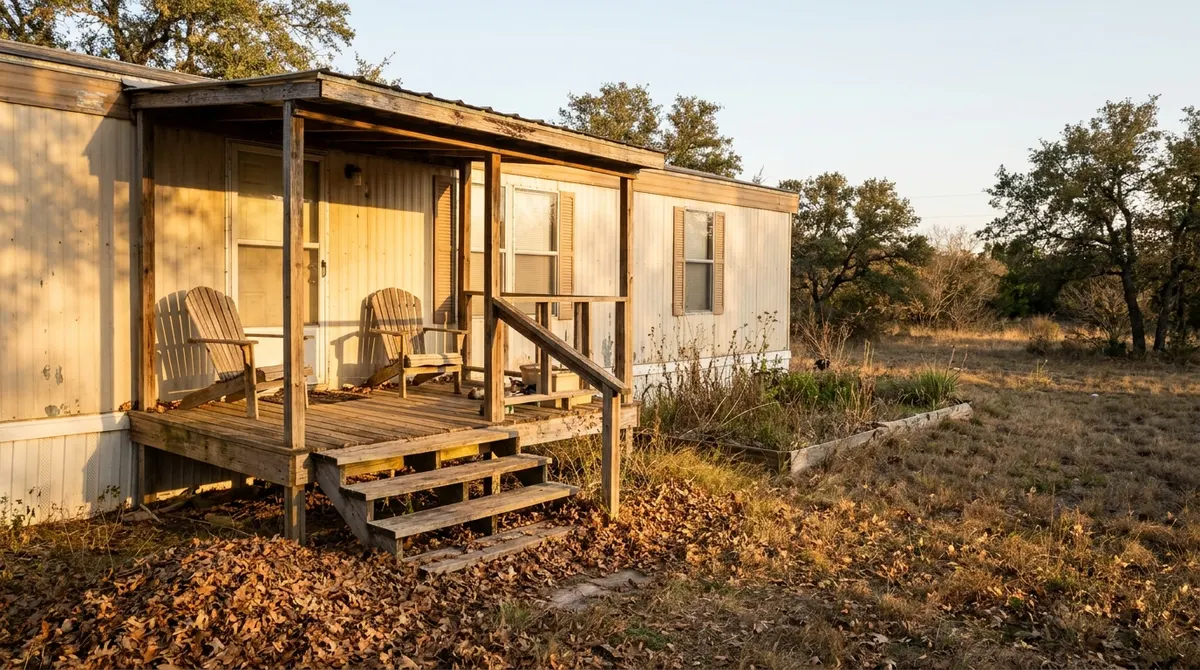
Condition. This one is not a bill, so nobody counts it. An unoccupied manufactured home deteriorates faster than an occupied one. Nobody notices the drip, nobody hears the HVAC fail, and animals find the belly wrap within a season. That is real value leaving the estate every month.
Add those up for your home. That is the monthly cost of not deciding.
The routes to authority, roughly from simplest up
Texas gives families more than one way through this, and the manufactured home world has its own instrument.
TDHCA Statement of Inheritance, MHD Form 1014. TDHCA publishes a form containing an affidavit of heirship in which heirs attest that the owner of record died on a stated date, that there was no will or that no application for probate or administration has been filed, and that the signers are the sole heirs at law and are authorized to sell, transfer and assign the home. It exists because pushing every small manufactured home through a formal probate would serve nobody. It is on TDHCA’s forms and affidavits page.
Affidavit of heirship. The Estates Code route for establishing heirship without a court, addressed at Chapter 203. Worth understanding its limits: the statute contemplates that such an affidavit becomes evidence concerning the property once it has been on file for five years, and no law requires a third party to accept one. Some institutions do not.
Small estate affidavit. Estates Code Chapter 205, for estates that meet its specific requirements where there was no will.
Probate of a will as a muniment of title. Estates Code Chapter 257, which fits well when there is a will, the estate has no unpaid debts other than one secured by a lien on real estate, and property needs to be transferred.
Full administration. Where there are debts, disputes, or complexity that the informal routes cannot carry.
The Texas State Law Library publishes a genuinely useful plain-language guide to the informal methods. Read it before paying anyone to explain the same thing.
Which route fits is a legal question and it depends on the will, the debts, the other assets and whether the heirs agree. It is worth one consultation with a Texas probate attorney to find out which track you are on. One consultation is cheaper than four months of lot rent.
Three things to do this week, before anyone has authority
None of these require you to be the executor.
Write to the community. Tell them in writing that the owner has died and the estate is being handled. Ask what they need and whether they will hold the lot. Communities respond far better to a letter than to silence and unpaid rent, and a manager who knows what is happening is a manager who may work with you.
Keep the insurance alive. If a policy exists, do not let it lapse over a payment nobody wanted to make. If it has lapsed, ask an agent what can be put in place on an unoccupied home.
Find the serial number and HUD label number. The data plate is usually inside a kitchen cabinet or a bedroom closet. The label is the metal plate outside at the end of each section. Nothing at TDHCA can start without them, and finding them takes twenty minutes now or a return trip later.
While you are there, look for the Statement of Ownership, any loan paperwork, the lot lease, and the last tax statement. If the record turns out to name somebody other than the person who just died, read our post on a Statement of Ownership in the wrong name, because that is a separate problem stacked on top.
Every Month the Estate Waits Costs Something
Tell us where the home is and what documents exist. We will tell you what can start today and what has to wait on authority.
Get My Cash Offer →Deciding what to do with it
Once authority exists, there are three real options and no universally right one.
Keep it. Only sensible if someone will live in it, or it can be rented where the community permits subleasing, which many do not.
List it. Reasonable for a home in decent condition, particularly on land the family owns. Expect a longer timeline and expect condition to come up.
Sell it as-is. Faster, no repairs, fewer contingencies, a lower gross number. Tends to make sense where the home needs work, where the estate is carrying real monthly costs, or where heirs live in different states and want it resolved.
What changes the answer is not sentiment. It is the monthly carry and the condition. Our post on how a cash offer is actually calculated shows which of those a buyer is pricing.
Get a number early, even if you do nothing with it
Knowing what the home is realistically worth in its current condition makes every other decision easier, including the decision to keep it.
We buy inherited manufactured homes across Central Texas, including homes still titled to someone who died years ago, homes in communities with rent arrears, and homes that need more work than the family wants to manage. We work across Austin, Bastrop, Burnet and the surrounding counties. We will also tell you when the right move is to finish the paperwork and list it.
We Work With Heirs and Executors
Homes where the owner of record died years ago, homes still in a community, homes nobody has been inside in months.
Get My Cash Offer →This article is general information about Texas estate procedure and manufactured home titling. It is not legal or tax advice, and the correct estate instrument depends entirely on individual circumstances. Consult a Texas probate attorney, the county clerk, or TDHCA’s Manufactured Housing Division about your specific situation.
Sources: Texas Estates Code Chapter 203, Nonjudicial Evidence of Heirship; Texas Estates Code Chapter 205, Small Estate Affidavit; Texas Estates Code Chapter 257, Probate of Will as Muniment of Title; Texas State Law Library, Informal Probate Methods; Texas Property Code Chapter 94; TDHCA, Forms and Affidavits for Statement of Ownership Applications