The most common complaint we hear about cash offers is not that they are low. It is that nobody explains them. An owner gets a number, has no idea where it came from, and reasonably assumes it was invented.
It was not invented. A cash offer on a manufactured home is an arithmetic problem with a fixed set of inputs, and every serious buyer in Central Texas is running the same ones. You may not like the answer, but you are entitled to see the work.
Here is every line.
Line one: what the home resells for, not what it cost
The starting number is never replacement cost and it is rarely what you paid. It is what this specific home, in this specific spot, would sell for once it is clean, working and legally transferable.
That number is driven by things you mostly cannot change. Age, size, whether it is a single-wide or a double-wide, the floor plan, and above all where it sits. The same 1998 double-wide is a different asset on five acres outside Bertram than it is on a leased lot off Burleson Road, because the buyer pool for each is completely different.
This is where owners and buyers most often disagree, and the disagreement is usually about the wrong thing. Owners compare to what the home would cost new. Buyers compare to the last three homes like it that actually changed hands nearby.
Line two: the repair list, priced at contractor rates
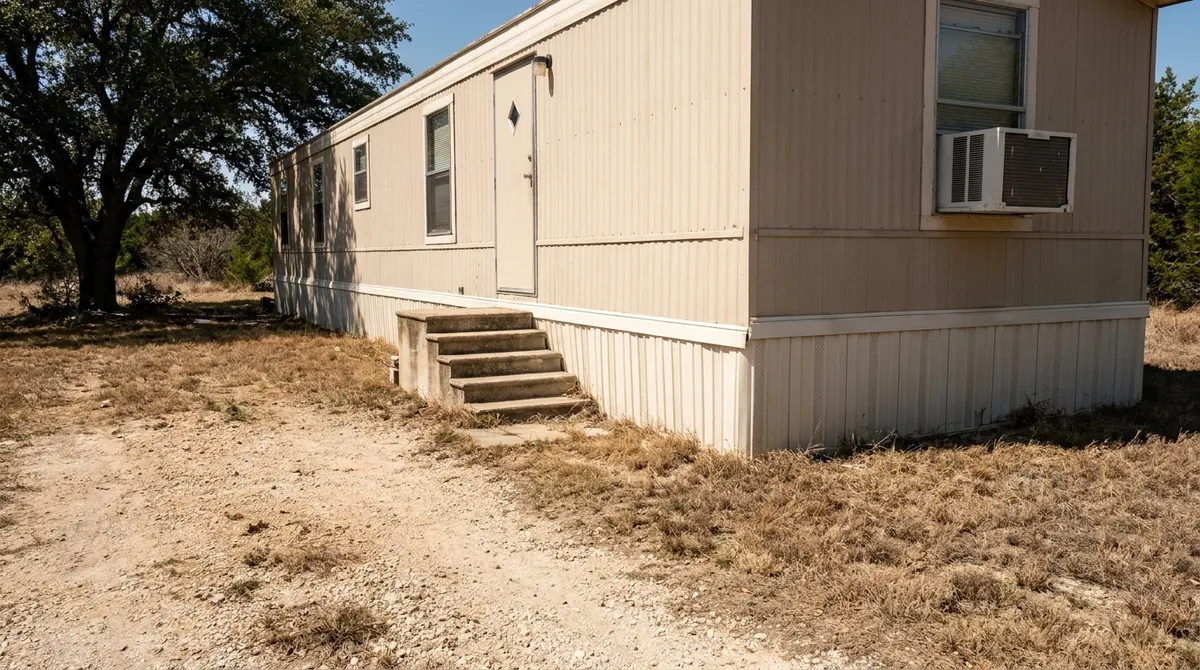
Every buyer walks the home and builds a scope. Roof, floors, the belly wrap underneath, HVAC, plumbing, electrical, skirting, leveling, windows and doors.
Two things surprise sellers here.
The first is that the scope is priced at what a licensed trade charges, not at what the work would cost you on a Saturday with a friend who does roofs. If you are handy, your cost and the buyer’s cost are genuinely different numbers, and that gap is real money that belongs to whoever does the work.
The second is that soft floors and water stains are priced wider than they look. Water in a manufactured home rarely stops at the visible edge. A soft spot at one corner of a hallway usually means the subfloor is compromised past where you can see, and the scope reflects the likely area rather than the visible one.
Line three: on land, or on a lot
This is not a small adjustment. It changes what kind of transaction it is.
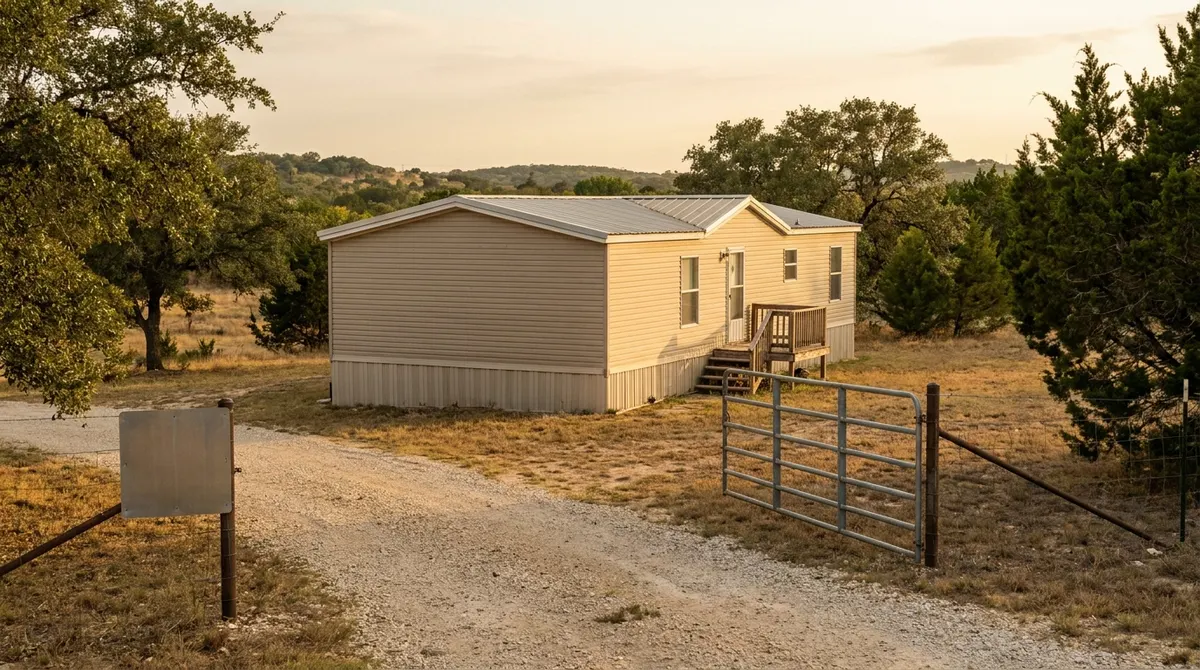
If the home sits on land you own, the buyer is buying a piece of real estate with a structure on it, and land in Travis, Hays, Comal and Caldwell counties has done what it has done over the last decade. The home might be the smaller half of the value.
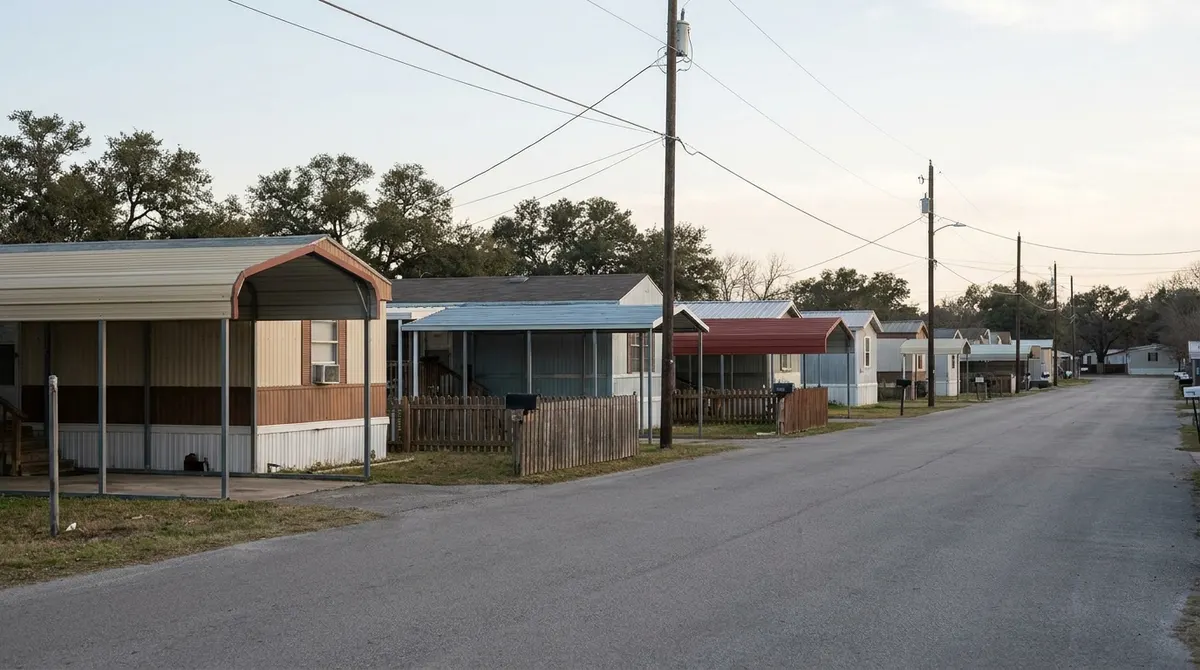
If the home sits on a leased lot in a community, the buyer is buying the home only. There is no land underneath the deal. The value is the home, minus whatever the community’s rules, rent level and approval process do to the pool of people who can buy it. A home in a well-run community with reasonable rent and a cooperative manager is worth more than the same home in a community that takes six weeks to approve anybody.
We wrote separately about how a community sale and a land sale actually differ, because it is the single biggest fork in the road.
Line four: can it be moved, and would anyone want to
Movability is an option, and options have value. A home that can be permitted, transported and reinstalled somewhere else gives a buyer a second exit. A home that cannot be moved gives them one.
Homes fall out of the movable category because of age and construction, because a community will not accept a home of that vintage, because the frame or floor will not survive the trip, or because the move plus the new setup costs more than the home is worth on the other end. A home built before 15 June 1976 predates the federal HUD construction standard entirely, which narrows both financing and where it can be relocated.
Line five: title status and the paperwork clock
In Texas the ownership document is the Statement of Ownership, issued by the Manufactured Housing Division of TDHCA. There are two facts about it that move offers more than most sellers expect.
First, under Texas Occupations Code Chapter 1201, ownership does not pass at the sale. It passes when a completed application for a Statement of Ownership is filed with the department. A handshake and a signed bill of sale do not transfer a Texas manufactured home.
Second, TDHCA states that a complete application takes up to 15 business days to process in regular handling. That is the clean case. A record that shows a prior owner who never filed, a lien with no release on file, or a name that does not match the driver’s license is not the clean case, and those take as long as they take.
A home with a clean, current Statement of Ownership in the seller’s own name is worth more to a buyer than the identical home with a broken chain, because the buyer’s money is not sitting still while somebody chases a release from a lender that was acquired twice. If your paperwork is in that second category, our guide on a missing or wrong Statement of Ownership covers what it takes to fix.
Want to See These Lines on Your Own Home?
Send us the address and a few photos. We will walk the number with you line by line, including the parts you will not like.
Get My Cash Offer →Line six: carrying cost between now and resale
From the day a buyer closes to the day they sell it again, somebody pays for the home to exist.
On a leased lot that is lot rent, every month, whether or not anyone lives there. On owned land it is property taxes and insurance. Either way it is utilities, because you cannot show a dark house and you cannot run a wet-vac without power.
Multiply that monthly figure by the honest number of months the work and the resale will take, and subtract it. This is why a home in a community with high lot rent draws a different offer than the same home in a community with low rent. It is not a judgment about the community. It is a bill the buyer is agreeing to pay.
Line seven: the risk allowance
The last line is the one people find hardest to accept, and it is the most honest one on the list.
A cash buyer is committing to close without a financing contingency, usually without a long inspection period, and often on a home they cannot get fully under. Everything they cannot see is theirs. Unpermitted additions, a septic system nobody has looked at in fifteen years, an old repair that hid rather than fixed, a community that will not approve the next buyer.
The allowance for that is not a fee. It is the price of certainty, and certainty is the actual product a cash buyer sells. If you do not need certainty, you should not pay for it.
What actually moves the number up
Some of this is in your control.
- Let the buyer see everything. Clear access under the home and into the closets. What a buyer cannot inspect, they price as if it were bad.
- Stop anything that is actively leaking. Not a new roof. Just stop the water. Every week of intrusion widens the scope.
- Have the paperwork in hand. Current Statement of Ownership, any lien payoff letter, the last tax statement, the lot lease. A buyer who can verify the chain in an afternoon prices differently than one who cannot.
- Know your lot rent and whether it is current. Arrears come off the top in almost every community sale.
- Get more than one offer. Different buyers have different resale channels and genuinely different numbers. That is not a trick, it is the market.
When the math says list instead
If your home is in good condition, sits on land you own, has a clean Statement of Ownership, and you are not on a clock, the arithmetic above tends to favor listing. You would be paying a cash buyer for speed and certainty you do not need.
We say that to people every week, and we will say it to you. If your situation is closer to that, read our comparison of a cash sale against listing in Central Texas before you accept anything.
If you would like to see these lines applied to your actual home, send us the address and a few photos, including the roof and underneath if you can get them safely. We will walk you through the number line by line, including the parts you will not like. We work across the Austin metro, from Austin and Pflugerville out to Bastrop and the Highland Lakes.
Get the Math on Your Manufactured Home
A no-obligation cash offer, with the arithmetic shown. We also tell people when listing is the better move.
Get My Cash Offer →This article describes how manufactured home buyers commonly price homes and is general information only. It is not an appraisal, and it is not legal, tax or financial advice. Mobile Bye Bye is a TDHCA-licensed manufactured home brokerage, not a law or accounting firm.
Sources: Texas Occupations Code Chapter 1201, Manufactured Housing; TDHCA, Applying for a Statement of Ownership; TDHCA, Statement of Ownership FAQ; HUD Office of Manufactured Housing Programs