There is a right order to selling a manufactured home you still owe money on, and almost nobody follows it.
The wrong order is to decide what the home is worth, take an offer, and then call the lender. The right order is to get the payoff first, because the payoff is the only number in the transaction you cannot negotiate down by trying harder. Everything else bends around it.
This article is about that first phone call and what comes out of it. If you want the wider walkthrough of liens, priority and closing mechanics, we have a full guide on selling a Texas mobile home with a lien. This one stays on the payoff itself.
Why the payoff comes first
Your loan balance and your payoff are not the same number, and the difference is not trivial.
The balance on your statement is a snapshot of principal. The payoff is what the lender will actually accept to release its interest in the home on a specific day, and it typically includes accrued interest through that day, any unpaid late fees, and whatever the lender charges to process a release. On older chattel loans it can also pick up amounts that were advanced on your behalf, most commonly force-placed insurance premiums from a stretch when your own policy lapsed.
Owners are regularly surprised by a payoff that sits well above the balance they had in their head. Finding that out before you agree to a price is a much better experience than finding it out at closing.
How to request one
Call the lender’s payoff or loss mitigation line and ask for a written payoff quote for a sale. Say "for a sale," because it is a different document from a routine balance inquiry.
Expect them to want the account number, the borrower’s identity verified, and sometimes a written authorization before they will send it to a title company or a buyer. If the home is titled to two people, most lenders will want both. Ask them to send it to you directly as well as to whoever is closing. You want to read it yourself.
Ask for a quote good at least thirty days out. A payoff that expires in nine days is a payoff you will be re-ordering.
Reading the four numbers that matter
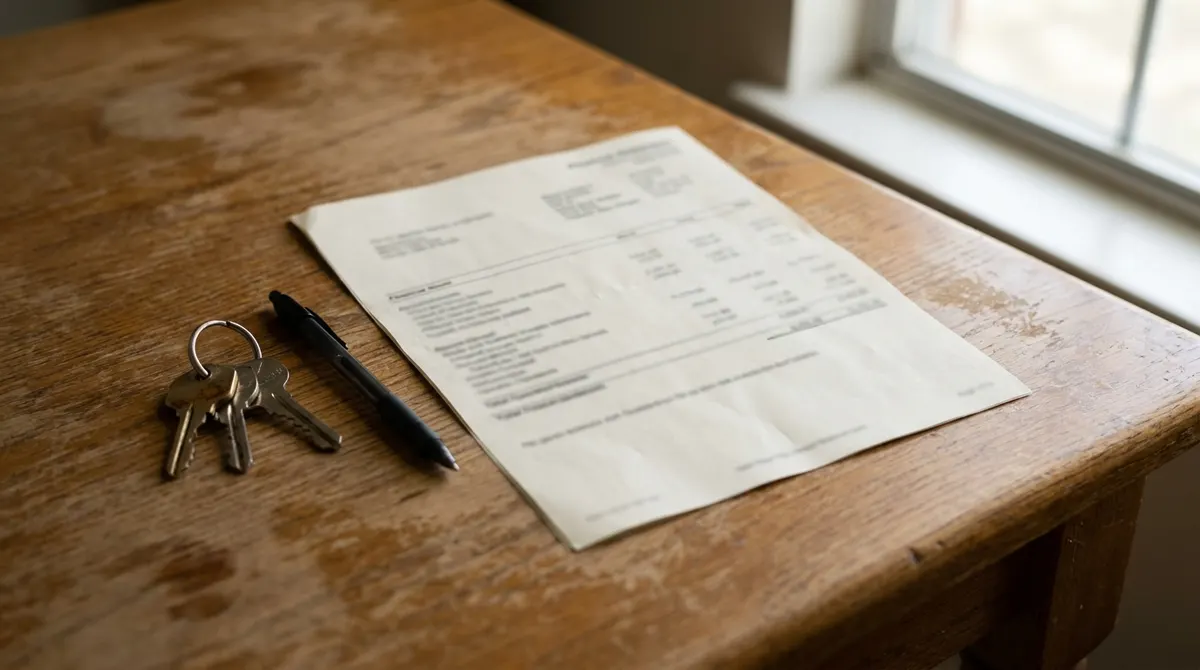
The payoff amount. The total to release the lien, as of a stated date.
The good-through date. The last day that exact amount is valid. Funds have to reach the lender by that date, not be sent by that date. Wire timing and weekends eat this alive.
The per diem. The daily amount that gets added after the good-through date. It is small in isolation and it is the reason a deal that slips three weeks closes short.
The remittance instructions. Where the money goes and what has to be on the wire. A payoff sent to the wrong department at the right bank can sit for a week, and during that week the per diem keeps running.
Two more items worth asking about while you have them on the phone. Is there a prepayment penalty, and is there an escrow or insurance balance that will be refunded to you after payoff. The second one is money that comes back to you, and nobody volunteers it.
What happens at closing
The sequence is boring, which is the point.
Buyer’s funds arrive at closing. The payoff is sent directly to the lender rather than to you. The lender applies it and files its release with the Manufactured Housing Division of TDHCA. TDHCA can then issue a Statement of Ownership in the buyer’s name without the lien on it.
Two details from Texas Occupations Code Chapter 1201 are worth holding onto. Ownership of a Texas manufactured home does not pass at the sale itself. It passes when a completed application for a Statement of Ownership is filed with the department. And the application is expected within sixty days of the sale, with TDHCA able to assess a late fee against the seller after day sixty. So the paperwork is not an afterthought you get to a month later. It is the transfer.
TDHCA states that a complete application takes up to 15 business days in regular processing. The release from the lender is the part with no published clock, and it is usually the long pole. Our breakdown of the four clocks in a Central Texas sale shows where it sits against everything else.
Owe More Than the Home Is Worth?
We buy Central Texas manufactured homes with active liens and coordinate the payoff directly with your lender.
Get My Cash Offer →When the payoff is bigger than your best offer
This is the situation that brings most people to this article, and it is more common on twenty-year chattel loans than anyone likes to admit. Manufactured homes depreciate in ways that the amortization schedule does not care about, so it is entirely possible to be current on every payment and still owe more than the home will bring.
There are four real paths. None of them is painless.
Bring the difference to closing. If the gap is modest and you have the cash, you write a check for the shortfall, the lien is released, the home is gone and the debt is gone. You walk away with nothing, which is better than it sounds if the alternative is another year of payments on a home you do not want.
Ask the lender to approve a short payoff. The lender agrees in writing to release its lien for less than the full balance. Some chattel lenders will consider this and some will not. Expect a hardship letter, financial documentation, a signed contract to look at, and real added time. Forgiven debt can be reported to the IRS as cancellation of debt income, so this is a conversation to have with a CPA before you agree to anything, not after.
Keep the home and change the math. Sometimes the honest answer is that selling today is the wrong move. If the home is livable and the payment is manageable, another year or two of principal reduction can close a small gap on its own.
Talk to the lender about surrender. Giving the home back is a last resort with credit consequences similar to a foreclosure, and it should be discussed with a Texas attorney first. We mention it because leaving it off the list would be dishonest, not because we recommend it.
Our post on being upside down on a chattel loan works through the decision in more depth.
The things that actually delay these closings
After enough of these, the delays repeat.
- A payoff ordered too late. Order it before you price the home, not after you have a contract.
- A second lien nobody knew about. Property tax liens, an abstracted judgment, a contractor’s lien. Pull a TDHCA record search and a county search early. Checking for liens is cheap and finding one late is not.
- A name mismatch. The name on the Statement of Ownership does not match the name on the loan or the driver’s license, usually because of a marriage, a divorce or an informal sale years ago.
- The release that never gets filed. The loan is paid, everyone is happy, and nobody follows up with the lender to confirm the release reached TDHCA. Follow up. Then follow up again.
What to do this week
Order the payoff. Pull your Statement of Ownership. Get last year’s tax statement. If the home is on a leased lot, ask the community for a written statement of what you owe them.
With those four documents you can have a real conversation about price, because you will know what you actually net rather than what you gross. We buy manufactured homes across Central Texas with active liens on them, from Austin and San Marcos to Killeen and Waco, and we will coordinate the payoff directly with your lender. We will also tell you when the numbers say to wait.
Start With the Payoff. We Will Help You Read It.
Send us your payoff quote and your Statement of Ownership and we will tell you what you would actually net.
Get My Cash Offer →This article is general information about loan payoffs and manufactured home titling in Texas. It is not legal, tax or financial advice. Debt forgiveness, short payoffs and surrender all carry consequences that depend on your circumstances. Consult a Texas attorney or a CPA before making a decision.
Sources: Texas Occupations Code Chapter 1201, Manufactured Housing; TDHCA, Applying for a Statement of Ownership; TDHCA, Statement of Ownership FAQ; TDHCA Manufactured Housing Division forms and affidavits