Divorce sales stall for one reason more than any other, and it is not disagreement about price. It is that two names are on the Statement of Ownership and the process needs both of them.
That is a mechanical problem, not an emotional one, and it can be solved even when the emotional part is nowhere near solved. This article is about the mechanics. For the wider legal picture, including community property and what a decree should address, see our post on divorce and selling a mobile home in Texas. This one is about getting a jointly titled home from listed to closed.
Why two signatures, and why that is different from a house
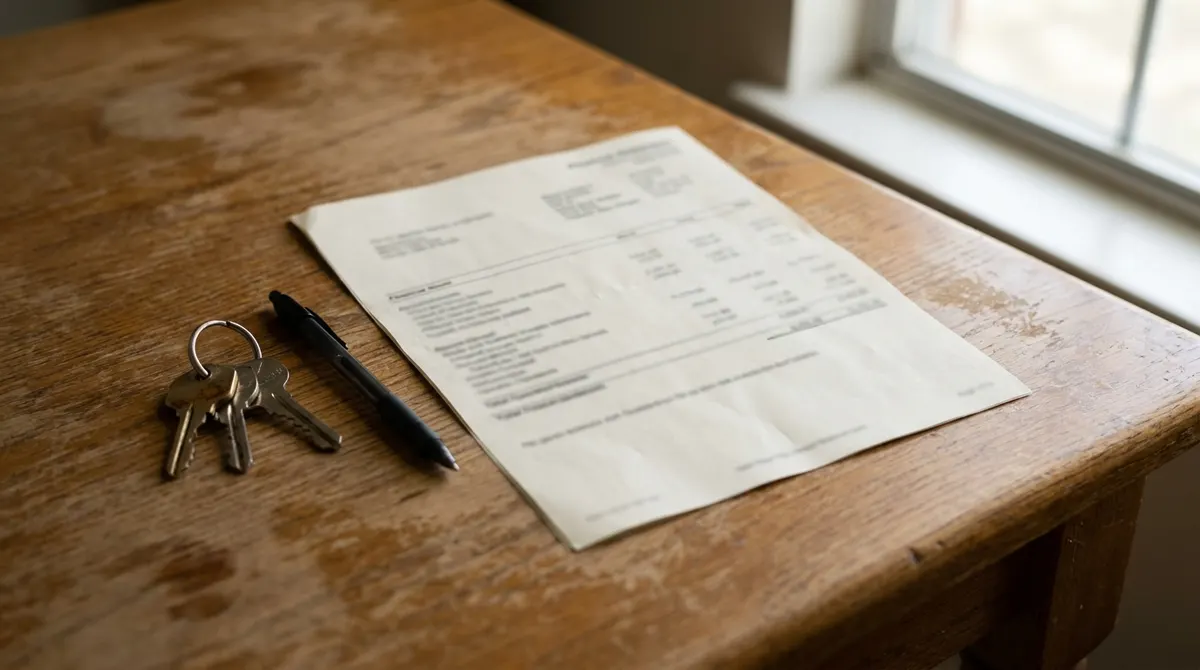
A Texas manufactured home does not have a deed. It has a Statement of Ownership issued by TDHCA, and the transfer happens by application to the department rather than by recording an instrument at the county.
Under Texas Occupations Code Chapter 1201, ownership does not pass at the sale. It passes when a completed application for a Statement of Ownership is filed with the department. If two people are the owners of record, a complete application generally means both of them, with identification that matches the names on the record.
The practical consequence: one spouse cannot quietly sell the home. Neither can one spouse quietly refuse forever, but the fix for that is a court order, and court orders take time.
The document that solves most of this
If a divorce is already underway or finished, the decree or the mediated settlement agreement is the instrument that unsticks the title. What it needs to do is be specific.
A decree that says "the mobile home is awarded to Wife" leaves real questions unanswered. A decree that identifies the home by its serial number and HUD label number, states who is awarded it, orders the other party to sign whatever TDHCA requires, addresses the loan, and addresses the lot lease is a decree that closes.
Four things worth asking your attorney to include, in the home’s own terms rather than in general language:
- Identification of the home. Serial number, HUD label number, make, model, year, and the physical location including lot number if it is in a community.
- Who signs. An express obligation on the non-awarded party to execute the TDHCA application and any affidavits, with a timeframe.
- The debt. Who is responsible for the loan, and whether the home is being sold to satisfy it. Awarding the home to one spouse does not remove the other from the promissory note. Only the lender does that, and lenders generally do it by refinancing or by payoff.
- The lot. If the home is on a leased lot, who is the tenant, who pays the rent, and by when the lease is transferred or terminated.
We are not attorneys and this is not legal advice. But we have seen many decrees, and the ones that close are the specific ones.
The clock nobody is watching
While the legal process runs, the home keeps costing money.
If it sits on a leased lot in a Central Texas community, lot rent comes due every month regardless of who is living there, whether anybody is living there, and how the case is going. Under Texas Property Code Section 94.206 a landlord may terminate the lease and evict when the tenant falls behind by at least one month’s rent, gives written notice of the delinquency, and the tenant has not paid in full before the tenth day after receiving that notice. The statute does not pause for a pending divorce.
That is the scenario we are called into most often: two people, both assuming the other is paying, and a notice on the door. If you are already behind, read our lot rent timeline guide today rather than next week.
The same is true of insurance and property taxes on a home sitting on owned land. An uninsured, unoccupied home in a hail-prone part of Texas is a risk that belongs to both parties.
Whatever else is unresolved, agree on this one thing early and in writing: who pays the carrying costs until the home is gone. It is the cheapest agreement either of you will make.
The practical sequence
- Pull the record. Confirm what TDHCA actually shows: both names, one name, a name from a previous marriage. Do not assume. If the record does not match either of you, our guide on a wrong name on the Statement of Ownership applies before anything else can happen.
- Order the payoff. If there is a loan, the payoff is the number that determines whether there is any equity to divide. Get it before you argue about the split. How to read one.
- Get the lot status in writing. Current balance, the lease term, and what the community requires to approve a buyer.
- Decide sell or buy out, with the real numbers. A buyout only works if the remaining spouse can actually assume or refinance the loan. Most chattel lenders will not simply release one borrower because a decree says so.
- Sell through one point of contact. Pick one person, or one professional, to be the channel. Deals die when a buyer has to get two separate answers to every question.
Two Names on the Record?
We close jointly titled manufactured homes across Central Texas and we can work with both sides separately.
Get My Cash Offer →When a buyout makes sense and when it does not
A buyout usually works when one person genuinely wants to stay, the payment is affordable on one income, and the lender will put the loan in that person’s name alone.
It usually does not work when the loan cannot be refinanced. Leaving one spouse on a chattel note for a home they no longer own and cannot control is a long-term problem wearing the costume of a short-term solution. If the lender will not release the other party, be honest that the buyout is not really a buyout.
Selling is often the cleaner outcome for exactly that reason. One transaction ends the debt, the lot tenancy, the insurance, the taxes and the argument.
Keeping it civil enough to close
A few things that genuinely help.
Agree on the process before the price. Who gets the offers, how you evaluate them, and what happens if you disagree. Removing the procedural fight removes most of the fight.
Get more than one offer, together. Two people looking at the same three numbers argue less than two people each holding one number.
Use a neutral channel. A licensed brokerage, a title company, or both attorneys. Anything that means neither of you has to interpret the other.
Set an outside date. Even a soft one. Open-ended situations in a community with rising rent tend to resolve badly.
If you would rather it just be over
We buy jointly titled manufactured homes across Central Texas, including homes where the two owners are not speaking, homes in communities, and homes with an active loan. We are a TDHCA-licensed brokerage, so the signature requirements and the transfer are our normal week rather than a research project.
We can present the same written offer to both parties and both attorneys at once, coordinate the payoff with the lender, and handle the community approval. We can also tell you, plainly, when the home has enough equity and enough condition that listing it would leave both of you better off. We work throughout the region, including Austin, Killeen, New Braunfels and San Antonio.
None of this requires the divorce to be finished. It requires knowing what the home is worth, what is owed, and what the lot costs every month it sits.
Sell Without Turning It Into a Second Fight
One buyer, one closing, separate conversations if that is what it takes. Tell us where things stand.
Get My Cash Offer →This article is general information about Texas manufactured home titling and is not legal advice. Property characterization, decree language, and the division of marital property depend entirely on individual circumstances. Consult a Texas family law attorney about your case, and a CPA about any tax consequences.
Sources: Texas Occupations Code Chapter 1201, Manufactured Housing; Texas Property Code Chapter 94, Manufactured Home Tenancies; TDHCA, Applying for a Statement of Ownership; TDHCA, Forms and Affidavits