
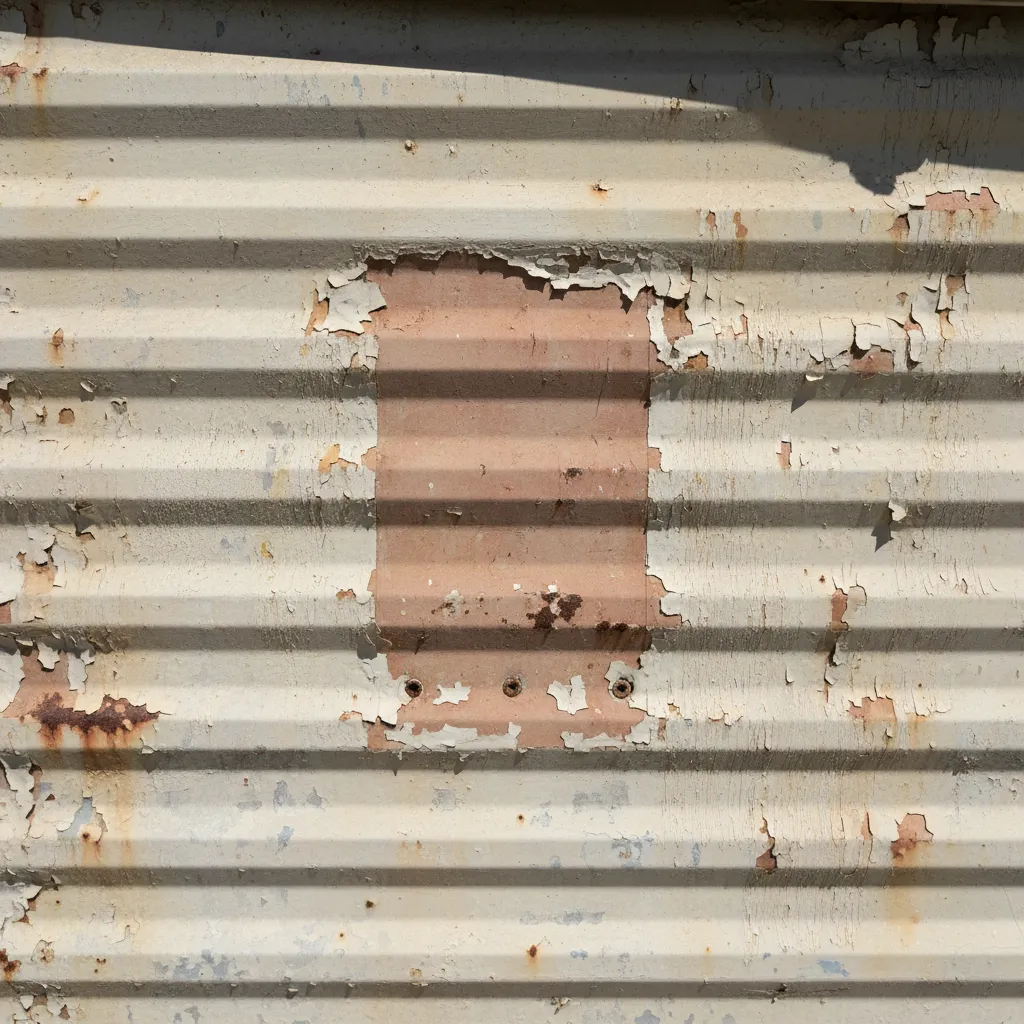
If you are trying to sell a Texas mobile home and the little red HUD tag outside is gone — or the data plate inside the kitchen cabinet has been painted over — you are not alone. This is one of the most common issues I see as a TDHCA-licensed broker. The good news: a missing label does not make your home unsellable. The bad news: it affects who will buy it, how fast it will sell, and whether a lender will touch the deal. This guide covers what the two labels are, why they matter, how to replace them through IBTS, and your real options when they are missing.
The Two Different Labels — And Why Both Matter
Almost every conversation about “the HUD tag” gets confused because there are actually two separate labels required on every HUD-code manufactured home, and people use the terms interchangeably. They are not the same thing. Missing one is a problem; missing both is a bigger problem. Before you do anything else, you need to know which label (or both) is gone.
Label 1: The HUD Certification Tag (Exterior Red Tag)
The HUD certification tag is a small red metal plate, roughly 2 inches by 4 inches, riveted to the exterior of the home. It is required on every transportable section of every manufactured home built in the United States after June 15, 1976. A single-wide has one tag. A double-wide has two — one on each section. A triple-wide has three.
Where to look:
- On the tail-light end of each section (the end that was at the back when the home was towed to the site)
- Near the bottom of the exterior wall, usually about 1 foot above the bottom of the siding
- Sometimes hidden behind skirting, behind a deck, or behind later-added siding or trim
The tag is stamped with a unique HUD label number in the format of three letters followed by six or seven digits — for example, TEX0123456. That number is permanently tied to the home in HUD’s records and in the manufacturer’s archive. It proves the home was built to the federal HUD code, inspected, and certified.
Label 2: The Data Plate (Interior Paper Label)
The data plate is a completely different document. It is a laminated paper label, usually about 8.5 by 11 inches, glued or stapled inside the home. The most common locations are:
- The inside of a kitchen cabinet door (the most common spot)
- Inside a bedroom or hallway closet
- In the utility room, near the electrical panel or water heater
- Inside the master bedroom closet door
The data plate contains far more information than the exterior tag. It lists:
- Manufacturer name and address
- Plant of manufacture
- Model designation
- Serial number
- Date of manufacture
- HUD label number(s) for each section
- Wind zone rating (Zone I, II, or III)
- Thermal zone (Zone 1, 2, or 3)
- Roof load zone (North, Middle, or South)
- A map of the United States showing where the home was designed to be installed
- The list of major appliances installed at the factory
The data plate is the single most useful document for appraisers, inspectors, lenders, and buyers because it tells them everything about how and where the home was built. When a lender asks for the HUD label number, the serial number, and the date of manufacture, the data plate has all three on one page.
Why Both Labels Matter
The two labels back each other up. If a buyer or lender can see either one clearly, they can usually verify the home through HUD and the manufacturer. If both are gone, there is no on-site proof that the home was ever HUD-code certified. That is when you need an IBTS Label Verification letter — more on that below.
Why Missing Labels Tank Your Financing Options
Here is the part that catches most sellers off guard. You can have a perfectly clean TDHCA Statement of Ownership in your name, no liens, no back taxes, a solid home in decent shape — and a buyer ready to close with a chattel loan. Then their lender asks for the HUD label number. The buyer walks outside, photographs where the red tag should be, and there is nothing there. The deal dies that afternoon.
Almost every major chattel lender in the manufactured housing space requires a verifiable HUD label number before they will underwrite a loan. That list includes:
- 21st Mortgage
- Triad Financial Services
- Vanderbilt Mortgage and Finance
- CountryPlace Mortgage
- Cascade Financial Services
- Most credit unions that finance manufactured homes
Their reasoning is simple: the HUD label is the federal government’s stamp that the home was built to code. Without that stamp — or a formal IBTS replacement for it — the lender has no way to confirm the home meets the baseline safety and construction standards they are required to verify under HUD and GSE guidelines. If the home is pre-1976, it was never built to HUD code in the first place, and most lenders will not finance it at all. For more on how chattel financing actually works, see our chattel loan guide.
The practical result is that a missing HUD tag shrinks your buyer pool from “everyone who qualifies for a chattel loan” down to “cash buyers and investors only.” Cash buyers generally pay less than a fully-financed retail buyer, so missing labels have a direct dollar impact on your exit price unless you fix the problem first.
Your TDHCA Title Is Probably Still Fine
One important clarification: a missing HUD tag or data plate is not a title problem. The Texas Department of Housing and Community Affairs tracks ownership through the Statement of Ownership (SOO), and that document exists independently of the physical labels on the home. If you have a valid SOO in your name, you still legally own the home. You can still sell it. You just cannot easily finance it.
If you are unsure whether your SOO is in order, read our Texas Statement of Ownership guide. If the SOO itself is missing or in someone else’s name, that is a separate issue from the HUD label — you will want to resolve the title first, because a clean title is a prerequisite regardless of which selling path you take. Similarly, if the original title was lost, our article on what to do when your Texas mobile home title is missing walks through TDHCA’s duplicate and bonded-title processes.
The short version: label problems and title problems are two different problems. Sort each one separately.
The IBTS Label Verification Letter — The Official Fix
When the HUD tag or data plate is missing, there is exactly one legitimate, lender-accepted way to replace the information: the Institute for Building Technology and Safety (IBTS). IBTS is the only entity authorized by HUD to research and verify original label data on manufactured homes.
What IBTS Actually Issues
IBTS does not ship you a new red metal tag to rivet on. What they issue is a Label Verification letter on IBTS letterhead stating the home’s original HUD label number, serial number, manufacturer, plant, and date of manufacture. Chattel lenders, appraisers, and TDHCA accept this as a legal substitute for the missing physical label.
What You Need to Apply
To submit an IBTS Label Verification request, you generally need:
- The home’s serial number (often found stamped on the chassis I-beam even when the data plate is gone)
- The manufacturer name
- The approximate year or date of manufacture
- Any photos of surviving label remnants or chassis stampings
- The current owner’s contact and payment information
If you do not know the serial number or the manufacturer, IBTS can sometimes do additional research based on photos, state records, and the home’s physical characteristics, but this adds time and cost. The more you can provide up front, the smoother the process.
Cost and Timeline
As of 2026, the fee is approximately $95 per transportable section. A single-wide costs one section’s fee; a double-wide costs two; a triple costs three. Standard processing typically runs 30 to 60 days from the date IBTS receives a complete application. Expedited options are occasionally available for an extra fee during less-busy periods. Fees and turnaround change periodically — always verify the current numbers directly with IBTS before you plan your timeline around them.
Tip: Start the IBTS process as early in your selling timeline as possible. Waiting until you have a buyer under contract and then discovering the tag is missing often kills deals, because 30 to 60 days of waiting is longer than most buyers will stay in contract.
Your Two Real Options for Selling
Once you know which labels are missing and you understand what IBTS can do, you basically have two paths. Each has real trade-offs and is right for a different type of seller.
Option 1: Get the IBTS Letter First, Then List Retail
If you want to maximize your sale price and you are not in a hurry, pursuing an IBTS Label Verification letter first is usually the right move. With the letter in hand, you can:
- List on the open market and attract buyers who need chattel financing
- Avoid losing deals 45 days into contract when the lender catches the missing label
- Potentially command a higher price because the buyer pool is larger
The trade-offs are the 30 to 60 day wait, the $95 to $300+ in IBTS fees, and the fact that you may still need to do normal retail-sale prep work (cleaning, minor repairs, showings). For a full breakdown of the retail-sale process, see our complete guide to selling a mobile home in Texas in 2026.
Best for: Sellers with a solid home in good condition who are not in a time crunch and want maximum dollar.
Option 2: Sell As-Is to a Cash Buyer
If you need to move quickly, if the home also has other issues (condition, back taxes, inherited title, park problems), or if you just want the whole situation off your plate, selling directly to a cash buyer bypasses the label problem entirely. A cash buyer does not need a lender’s blessing. They do not need an IBTS letter to close. They handle the label issue themselves — either by ordering their own IBTS verification post-purchase, or by rehabbing and reselling the home through a channel that does not require financing.
The advantages:
- Close in 7 to 14 business days once title is clear
- No 30 to 60 day wait for IBTS
- No repairs, cleaning, or showings
- No deal-killing lender surprises
- Certainty of closing — no financing contingencies
The trade-off is that the cash offer will typically come in below full retail, because the buyer is pricing in the IBTS process, the narrower resale market, and the time they will spend turning the home. For most sellers in a missing-label situation, when you net out the IBTS fee, holding costs, and the risk of retail deals falling through, the cash path is often within a reasonable margin of the retail path — and significantly less hassle. For a deeper comparison of timelines, see our guide on how to sell a mobile home quickly.
Best for: Sellers who want speed and certainty, sellers with additional complications, and sellers who would rather take a fair cash offer now than spend two months chasing a retail deal that may still fall apart.
Missing Labels? We Can Still Buy Your Home.
We purchase Texas mobile homes every month with missing HUD tags, painted-over data plates, or both. No IBTS wait, no lender, no repairs.
Get My Cash Offer →Special Case: Pre-1976 Mobile Homes
If your home was built before June 15, 1976, the missing-label situation is fundamentally different, and it is important not to confuse the two. The HUD code itself did not exist before that date. Pre-1976 homes are correctly called mobile homes (not manufactured homes), and they were never issued HUD certification tags. There is nothing missing — there was never anything there.
The implications:
- No IBTS fix exists. You cannot apply for a Label Verification letter on a home that was never certified in the first place.
- Financing is severely limited. Almost no chattel lender will finance a pre-1976 home under any circumstances.
- Park restrictions often apply. Many Texas parks will not accept pre-1976 homes for installation, and some will not approve the resale of an existing pre-1976 home to a new resident.
- Insurance is harder to obtain. Standard mobile home insurance policies often exclude or heavily surcharge pre-1976 homes.
If you have a pre-1976 home, your buyer pool is effectively cash buyers, investors, and park owners. This is not a label problem you can fix — it is a category of home the mainstream financing system does not serve. For a full breakdown of what to expect, read our guide on selling a pre-1976 mobile home in Texas.
Common Situations I See as a Broker
A few label scenarios come up again and again. Here is how each typically plays out.
“Someone painted over the red tag”
Very common. If the tag is still physically there under the paint, it can sometimes be gently uncovered with a soft solvent. If the paint is thick or vinyl siding was installed over it, order IBTS.
“The siding was replaced and the tag disappeared”
Also common. The tag was removed during re-siding and never reinstalled. IBTS is the only path — start immediately.
“The data plate is gone but the red tag is still there”
The best bad scenario. If you can read the HUD label number on the exterior tag, most lenders will accept that plus an IBTS verification letter even when the interior data plate is gone.
“Both labels are gone and I don’t know the serial number”
Hardest scenario. Check the chassis I-beam under the home — serial numbers are often stamped directly into the steel. A photo of that stamping is usually enough for IBTS to run the research.
“I have a double-wide and only one tag is missing”
Each section is labeled separately. Budget $95 for just the missing side rather than both.
What to Do This Week
If you are planning to sell and you are not sure about your labels, here is the short action list.
- Walk the home and check both label locations. Look at the tail-light end of each section, low on the exterior wall, for the red tag. Then check inside kitchen cabinets, closets, and the utility room for the data plate.
- Photograph anything you find. Even partial labels or paint-covered tags are useful data for IBTS or a buyer.
- Pull your TDHCA Statement of Ownership. The SOO often lists the HUD label number and serial number, which can save you the IBTS step entirely.
- Check the chassis if labels are gone. Serial numbers stamped into the I-beam are often the key to everything else.
- Decide your path. If you have time and want maximum dollar, start an IBTS application. If you want speed and certainty, get a cash offer and let the buyer handle the label issue.
FAQ: Missing HUD Tag and Data Plate in Texas
What is a HUD certification tag and where is it on a mobile home?
A small red metal plate, about 2 by 4 inches, riveted to the exterior of every HUD-code home built after June 15, 1976. Look on the tail-light end of each transportable section, near the bottom of the wall. Each section has its own tag with a unique HUD label number (for example, TEX1234567).
Is a data plate the same thing as the HUD tag?
No. The HUD tag is the red metal plate outside. The data plate is a laminated paper label inside the home — usually in a kitchen cabinet, a closet, or the utility room. The data plate lists manufacturer, serial number, date of manufacture, wind zone, thermal zone, and the HUD label numbers. Both matter for resale.
Can I still sell my mobile home in Texas if the HUD tag is missing?
Yes, but your buyer pool narrows to cash buyers unless you get an IBTS Label Verification letter first. Your TDHCA title is generally unaffected — this is a label problem, not a title problem.
How do I get a replacement HUD label through IBTS?
The Institute for Building Technology and Safety (IBTS) is the only HUD-authorized entity that can verify missing labels. They issue a Label Verification letter on IBTS letterhead (not a physical replacement tag) that lenders accept as a legal substitute. Submit your serial number, manufacturer name, and photos.
Will a chattel lender finance a mobile home with no HUD tag?
Usually not. 21st Mortgage, Triad, Vanderbilt, CountryPlace, and most others require a verifiable HUD label number or an IBTS Label Verification letter before they will underwrite a loan. Without one, financing is typically denied.
How much does an IBTS Label Verification letter cost and how long does it take?
Roughly $95 per section as of 2026 ($95 single-wide, ~$190 double, ~$285 triple). Standard processing is 30 to 60 days. Confirm current fees directly with IBTS before applying.
What if my home is pre-1976 and never had a HUD tag?
Pre-1976 homes pre-date the HUD code and never had a tag. They cannot be retrofitted, and most chattel lenders will not finance them at all. Selling typically means selling to a cash buyer or investor. See our guide on selling a pre-1976 mobile home in Texas.
Can Mobile Bye Bye buy my home if the data plate is missing?
Yes. We are a cash buyer, so we do not need HUD label verification or lender approval. As long as you have a valid TDHCA Statement of Ownership (or a path to get one), we can typically close in 7 to 14 business days.
Mobile Bye Bye buys mobile and manufactured homes across Texas in every condition, including homes with missing HUD tags and data plates. Call us at 737-214-0172 for a no-pressure conversation about your situation.
Disclaimer: This article is for informational purposes only. Mobile Bye Bye is a TDHCA-licensed manufactured home brokerage — we are not attorneys, HUD officials, IBTS representatives, or lending professionals. Fees, timelines, and procedures quoted here reflect typical values as of publication and can change without notice. Always verify current IBTS fees and processing times directly with IBTS, and consult a licensed professional for advice specific to your situation.
Ready to Sell, Labels or No Labels?
Get a no-obligation cash offer in 24 hours. Missing HUD tags, missing data plates, and missing titles welcome.
Get My Cash Offer →