
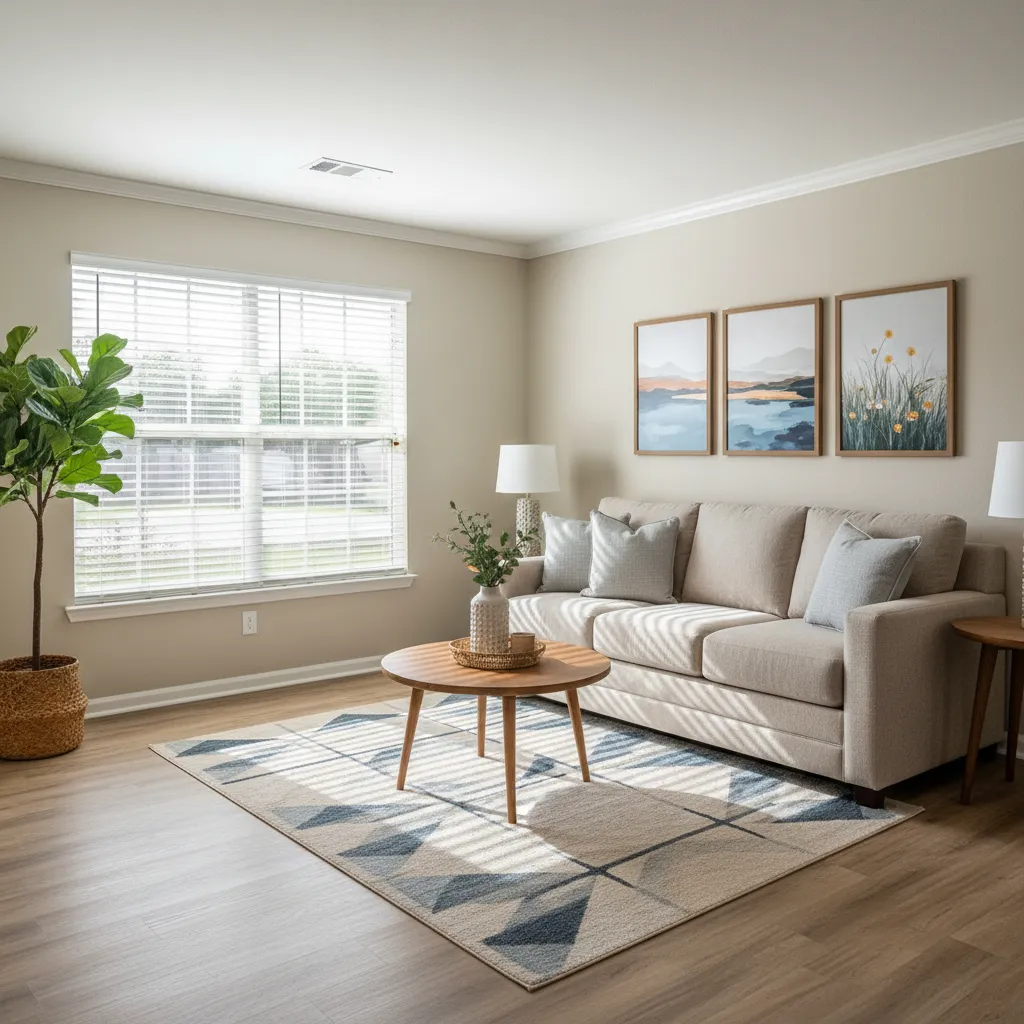
Listing a mobile home for sale in Austin is a very different game than listing a site-built house. Austin has one of the tightest affordability gaps in the country, which means there is real retail demand for well-presented manufactured homes — but only if you price, prep, photograph, and market them correctly. Get any one of those steps wrong and your home sits for four, five, even six months while neighboring listings close around you. This guide walks through the exact process a TDHCA-licensed broker uses to list an Austin mobile home for the top price the market will actually pay.
Why Austin Mobile Homes Are Uniquely Positioned Right Now
The Austin-Round Rock metro has one of the widest housing-affordability gaps in Texas. Median site-built prices sit above $450,000 while entry-level renters pay $1,600 to $2,200/month. A well-maintained single-wide or double-wide in a South or Southeast Austin park delivers a monthly all-in cost (lot rent plus chattel payment plus insurance) that beats the closest equivalent apartment by thousands. That gap is what creates retail demand for manufactured homes.
Three market dynamics drive Austin pricing in 2026:
- Land cost pressure: Austin land values have pushed developers out of the park business. Few new parks are being built inside city limits, and several older parks have been redeveloped. Supply is constrained while buyer demand keeps rising.
- Relocation and remote work: Austin continues to attract newcomers needing housing under $1,500/month all-in — a number a manufactured home in a well-run park hits.
- Chattel financing availability: FHA Title I and specialty lenders like 21st Mortgage, Triad, and Cascade are actively lending on Austin mobile homes, keeping the buyer pool deeper than cash-only markets.
The retail market is genuinely viable — if you approach it like a professional. Sellers who prep, price, and market tightly win.
Pricing: Stop Guessing, Start Using Real Data
The single most expensive mistake Austin sellers make is pricing based on what they hope to get rather than what the market has actually paid. The first two weeks on market are when your listing gets the most algorithmic lift on MHVillage, MobileHome.net, and Zillow. Burn that window with a price 20% above market and your listing is buried by week three — which often means a final sale price lower than a correctly priced launch would have produced.
A defensible Austin list price comes from layering four data sources:
1. NADA Manufactured Housing Cost Guide Book Value
The industry-standard valuation source. It provides a base value for your home’s year, manufacturer, model, and dimensions, then adjusts for condition and region. Values are conservative but give you a defensible floor and a data point lenders will recognize. See our mobile home appraisal versus NADA book value guide for how NADA compares to a formal appraisal.
2. Recent Comparable Active and Sold Listings
Pull five to ten comparable homes within a five to ten mile radius. Match on year range, size, bedroom/bathroom count, and park type. Record list price, sold price, days on market, and condition differences. Same-park comps are gold — they control for lot rent, rules, and location.
3. TDHCA Statement of Ownership Records
Every Texas mobile home sale gets recorded with TDHCA at title transfer. These public records show actual closing prices — the most accurate source available because it is filed paperwork, not self-reported. A TDHCA-licensed broker can pull the last 12 to 24 months of sold comps in your park.
4. Lot Rent and Park Approval Velocity
Two identical homes in different parks price very differently. A $450-lot-rent park with fast, reasonable approval sells for more than a $750-lot-rent park with a strict credit screen. Gut-check the total monthly carrying cost (home payment plus lot rent plus insurance) against comparable Austin rentals to see if a buyer will actually pull the trigger.
Start your listing intake at mobilebuybuy.com/list-home.html and we will pull all four data sources for your specific home and park before we ever agree on a list price together.
Pre-Listing Prep: The High-ROI Fixes That Actually Move the Needle
Austin buyers in 2026 have been trained by HGTV, Zillow, and Instagram to expect move-in-ready homes with bright, clean interiors. You do not need to renovate — you need to present. Spending $30,000 on a kitchen remodel on a home that will sell for $65,000 makes no financial sense. Spending $1,500 on strategic cosmetic fixes, deep cleaning, and curb appeal is where the real ROI lives.
The prep checklist I walk every Austin listing through:
- Declutter aggressively: Remove 50% of furniture if possible. Clear every countertop. Empty closets to 60% to make storage look generous.
- Deep clean: Floors, baseboards, oven, fridge, window tracks, bathroom grout. A pro clean runs $200 to $350 and is well spent.
- Touch-up paint and re-caulk kitchen and bathrooms to kill the "deferred maintenance" vibe.
- Replace worn hardware: Cabinet knobs, faucets, and light fixtures — a $300 refresh can add $2,000 to $5,000 in buyer willingness-to-pay.
- Handle carpet intelligently: Steam clean first; if worn out, switch to luxury vinyl plank — photographs beautifully and buyers love it.
- Fix obvious mechanical issues: Leaky faucets, running toilets, dead HVAC vents — these are deal-killers during walkthrough.
- Power wash the exterior (siding, skirting, steps, driveway pad) and tidy the lot (mow, edge, clear under the home, expose rust-free tie-downs).
- Stage the entry: New welcome mat, potted plant, working porch light — transforms the first five seconds.
Skip high-cost, low-return items: full kitchen remodels, master bath tear-outs, and appliance swaps. Manufactured home buyers do not pay premium prices for those the way site-built buyers do.
Photography: Why Pros Lift Your Close Price by Thousands
This is the single most underappreciated lever on an Austin mobile home listing. Professional photography is typically a $150 to $275 expense that reliably lifts final sale price by $2,000 to $8,000. The reason is simple: the first decision an Austin buyer makes is whether to click your listing at all, and that decision is made in less than two seconds based entirely on the lead photo.
Phone photos shot in dim interior lighting consistently underperform professional photos across every mobile home marketplace. MHVillage and Zillow both surface higher-quality imagery more often in their algorithmic feeds, so pro photos also mean more impressions per dollar of marketing. What professional mobile home photography includes:
- Wide-angle interior shots using a 16-24mm lens to make rooms look spacious without distorting
- Proper lighting with blinds fully open and interior lights on simultaneously — the "window pull" technique
- Exterior front and back shots during golden hour, detail shots of upgrades, and HDR processing so windows are not blown out
- Optional drone shot of the home in its park context, particularly valuable if the lot is large or the setting is attractive
A TDHCA broker listing engagement typically includes professional photography as part of the package.
Marketing Channels: MLS, MHVillage, and Where Austin Buyers Actually Look
Here is where a lot of sellers get bad advice from friends who sold a house in 2015. The marketing channels that work for site-built homes are not the same channels that move Austin mobile homes. Listing on MLS alone is usually a mistake because most MLS systems do not handle personal-property chattel homes well, and because the traditional realtor buyer pool is not where mobile home buyers shop.
The channels that drive actual Austin mobile home showings:
- MHVillage is the dominant national marketplace for manufactured homes. The majority of serious Austin retail buyers start here. A featured listing with 20+ photos is essentially required.
- MobileHome.net — the second-tier marketplace, worth listing on for cross-exposure.
- Facebook Marketplace drives enormous local impression volume in Austin and is free. Relist every 7 to 14 days.
- Zillow’s limited manufactured home category catches buyers who started with site-built searches.
- TDHCA broker buyer database: Active brokers maintain lists of pre-qualified buyers and can circulate new listings privately before they go public — often generating first showings within 48 hours.
- In-park yard sign with a QR code to the full listing — often some of the best buyers already live in the park.
MLS is only the right primary channel when your home has been converted to real property through a TDHCA Statement of Ownership election and is permanently affixed to land you own. In that case you have access to the full TREC-licensed realtor network. For in-park homes on chattel title, MLS is typically a waste of the 3% buyer-side commission you would offer through it. For the broader debate about realtor vs TDHCA broker representation, read our realtor versus TDHCA broker comparison.
Park Approval: Disclose It at Listing, Not at Closing
If your home is in an Austin-area park, disclose the park approval requirement in the very first line of your listing description. Sellers who bury this until an offer is in hand end up with wasted showings, broken deals, and buyers who spent three weeks in financing only to get denied by the park office. Disclose upfront:
- Park name and current monthly lot rent
- That any buyer must pass park management approval (most Austin parks require credit, background, and income verification)
- Whether the park has a right of first refusal clause, plus pet policy and age restrictions (55+ parks cut your buyer pool in half)
Park-savvy TDHCA brokers can pre-screen buyers before they are presented to park management, which meaningfully lifts approval rates and keeps deals on track.
Required Disclosures and Paperwork
Texas has a specific body of required disclosures for manufactured home sales. A TDHCA-licensed broker prepares all of these automatically; FSBO sellers must handle them manually or face post-sale legal exposure.
Required disclosures on a typical Austin retail sale include:
- Lead-based paint disclosure on any home built before 1978 (EPA pamphlet plus federal disclosure form)
- Seller's Disclosure Notice listing known material defects: structural, roof, HVAC, plumbing, electrical, insurance claims
- Flood history if the home has ever flooded (Austin has real flood zones near creeks and the Colorado River)
- Tie-down status including anchor type and inspection history — relevant to buyer insurance
- Tax history from the Travis, Williamson, Hays, or Bastrop county appraisal district
- Current TDHCA Statement of Ownership with any listed liens addressed before or at closing
Cutting corners on disclosures is the single fastest way to end up in a post-sale dispute.
Showing Logistics: Living in the Home While It Is Listed
Most Austin mobile home listings are owner-occupied. That is fine — but it requires discipline to keep the home showing-ready and minimize the friction that kills deals.
- 24-hour showing window minimum, 2-hour is ideal. Requiring 72-hour notice or weekend-only showings cuts your buyer pool roughly in half.
- Leave for every showing. Buyers will not speak honestly or imagine themselves in the home if you are hovering.
- Lockbox access lets your broker show while you are at work — close to mandatory for owner-occupied listings.
- Keep it tour-ready every morning. Beds made, counters clear, blinds open, pets managed.
- Handle tenants carefully. Texas landlord-tenant law governs notice and quiet enjoyment. Consider a small incentive (one free month of rent at closing) in exchange for flexible showing access.
Ready to Launch Your Austin Listing the Right Way?
Start your intake online and we will pull NADA book value, recent comps, and a defensible list price range within 24 hours. No-cost listing consultation.
Start My Listing →Evaluating Offers: Not All Buyers Are Equal
When offers start coming in, the highest number on the page is rarely the strongest offer. The strength of an offer is a function of the price and the probability that it actually closes. In the Austin mobile home market, buyer types differ dramatically in that close probability.
Cash Buyers
The cleanest path to close: no financing contingency, no lender appraisal, no underwriting delay. Typical close timeline is 7 to 21 days. Trade-off: cash buyers almost always offer 10% to 20% below list. If certainty matters more than max price, cash wins.
Chattel-Financed Buyers
The largest segment of Austin retail buyers use chattel financing — loans secured by the home as personal property. Major lenders include 21st Mortgage, Triad Financial, and Cascade. A well-pre-qualified chattel buyer is a strong offer; an unknown-lender "pre-approval" letter is not. Ask for proof of funds for down payment and current credit verification before accepting.
FHA Title I and FHA 203(b) Buyers
FHA Title I is a federal program specifically for manufactured homes; borrowers have passed federal underwriting and typically have a meaningful down payment. Expect 3 to 5 weeks of extra closing time and a likely HUD-standards repair list. FHA 203(b) only applies when the home has been converted to real property on owned land and meets full FHA appraisal standards.
Red Flags
- No proof of funds or pre-approval provided
- Unusually long option periods (more than 10 days) or earnest money under $500 on a home over $40,000
- Buyer has not yet contacted the park about approval
Why a TDHCA-Licensed Broker Beats a Standard Realtor
Most real estate agents in Austin are TREC-licensed, meaning they are authorized to represent clients in the sale of real property — land, houses, commercial buildings. A mobile home that is classified as personal property (chattel), however, falls under the jurisdiction of the Texas Department of Housing and Community Affairs (TDHCA), not TREC. Texas law requires that anyone acting as an agent in the sale of a chattel-titled manufactured home hold a TDHCA retailer or broker license.
In practice: a TREC-only agent legally cannot list or negotiate a chattel-titled home; a TDHCA broker prepares and files all TDHCA paperwork including Statement of Ownership transfers, understands park approval and lot lease mechanics, and has relationships with the chattel lenders and marketing channels that actually move mobile homes.
We announced Mobile Bye Bye’s formal launch of TDHCA-licensed listing services in our recent press release. If you are weighing realtor versus broker, the realtor-versus-TDHCA-broker article has the detailed comparison. For a broader view, our complete 2026 selling guide walks through every option from FSBO to cash sale.
Austin Submarkets: Where the Demand Actually Sits
Austin is not one market, it is several. Each submarket has a distinct buyer profile and price elasticity.
South Austin Parks
The highest-demand mobile home submarket thanks to proximity to downtown, the 290/71 corridor, and South Congress/South Lamar employment. Expect competitive pricing and shorter days-on-market. Well-presented homes in established South Austin parks list in the $55,000 to $95,000 range.
East Austin and Dove Springs
East Austin is in a long-running transition from working-class neighborhoods to mixed-income redevelopment; older parks face land-value pressure that can raise financed-buyer concerns. The Dove Springs / far South submarket is one of the most consistently active for entry-level buyers with price bands from $35,000 to $70,000.
Southeast Austin, Del Valle, and Northern Suburbs
Southeast Austin and Del Valle along the 183 corridor have active park inventory and often see investor interest alongside owner-occupants. North of the city, Round Rock and Pflugerville family parks attract dual-income families drawn by school districts — days-on-market are longer but price ceilings are higher.
For the home models that consistently command premium pricing across these submarkets, see our top 5 manufactured home models in Texas review.
FAQ: Listing a Mobile Home in Austin
Can a regular Austin realtor list my mobile home?
Generally no, not if the home is classified as personal property (chattel). Texas manufactured homes not permanently affixed to owned land are regulated by TDHCA, and listing them requires a TDHCA retailer or broker license. A TREC-licensed realtor is only authorized for real property. If your home has been converted to real property through a Statement of Ownership election on land you own, a traditional agent can list the package — but most Austin mobile homes in parks must be listed by a TDHCA-licensed broker.
How do I price my mobile home for the Austin retail market?
Start with three data points: NADA Manufactured Housing Cost Guide book value; recent comparable listings on MHVillage and MobileHome.net within a five to ten mile radius; and TDHCA Statement of Ownership records for recent sales in your park. Layer on Austin factors — proximity to downtown, park reputation, school district, lot size. Overpricing is the single biggest reason Austin mobile homes sit for 120+ days.
What is a fair commission for a TDHCA broker to list my home?
TDHCA broker commissions typically range from 6% to 10% of sale price with a minimum floor of $3,000 to $5,000, because the fixed work of a listing is roughly the same whether the home sells for $30,000 or $90,000. Mobile Bye Bye’s listing agreements are transparent and disclosed up front.
How long does it take to sell an Austin mobile home retail?
A well-priced, well-photographed home in a desirable park typically sells within 30 to 75 days. Homes that need repairs, are overpriced at launch, or sit in less popular parks can take 90 to 180 days. If you need to move faster, a cash sale closes in 7 to 14 days. See how to sell a mobile home quickly for the speed play.
Do I need an MLS listing to sell a mobile home in Austin?
No — in many cases MLS is the weakest channel for a chattel-titled mobile home. Most MLS systems are built for real property and display personal-property homes poorly. The strongest Austin channels are MHVillage, MobileHome.net, Facebook Marketplace, and Zillow’s mobile home category. MLS is mainly useful when the home has been converted to real property on owned land.
What repairs should I make before listing?
Focus on high-ROI cosmetic fixes, not renovations: patch and paint, re-caulk, deep-clean or replace worn carpet with LVP, power-wash the exterior, tidy landscaping, and make sure all major systems function. Avoid expensive kitchen or bathroom remodels — you rarely recoup that spend on a manufactured home.
Can I list while I’m still living in the home?
Yes, and most Austin listings are owner-occupied. The key is flexibility: commit to a 24-hour notice window minimum, install a lockbox, keep the home tour-ready, and leave during showings. Expect 8 to 20 showings before a solid offer on a well-priced home.
How do I start the listing process with Mobile Bye Bye?
Start your intake at mobilebuybuy.com/list-home.html. Ivan Mills, our TDHCA-licensed broker, follows up within 24 hours to schedule a no-cost listing consultation. We pull NADA book value, recent comparable sales, and give you a defensible list price range before you commit. If listing is not the right fit, we can also present a direct cash offer.
Mobile Bye Bye is a TDHCA-licensed manufactured home brokerage serving the Austin-Round Rock metro. We list homes on the open retail market when that is the right play and make direct cash offers when speed matters more than top price. Call 737-214-0172 or start online at mobilebuybuy.com/list-home.html.
Disclaimer: This article is for informational purposes only. Mobile Bye Bye is a TDHCA-licensed manufactured home brokerage — we are not attorneys, financial advisors, or tax professionals. Nothing in this article constitutes legal, financial, or tax advice. Commission structures, market conditions, and regulations change; consult a licensed professional for advice specific to your situation.
Prefer a Cash Offer Instead of a Listing?
If the retail listing timeline does not fit your situation, we can present a direct cash offer in 24 hours. No repairs, no showings, close in 7 to 14 days.
Get a Cash Offer Instead →